InterAmerican Coffee
Brazil Matas de Minas Fazenda Derrubada
Home / Coffee Bios / Brazil Matas de Minas Fazenda Derrubada

Fazenda Derrubada is a farm in Matas de Minas produced by Raimundo Dimas Santana Filho in Araponga, Mata de Minas. The altitude of this farm is around 1,150 masl and produces yellow catuai and red bourbon. The farm was acquired around 1977 by the Santana family and has been producing coffee since then. In 2001, the farm passed exclusively to Raimundo Dimas Santana (father of Raimundo Dimas Santana Filho). Since then, all of the infastructure has been modified and adapted in order to produce better coffee in a socio-environmental manner. The original property was split into Fazenda Santo Antonio, its original name since 1977, and Fazenda Derrubada, which is ran by Raimundo Dimas Santana Filho.
In its first year, Fazenda Derrubada produced the best coffee in the state of Minas Gerais for "espresso" and was considered the second best in Brazil according to Illy Caffee spa., and has become a reference for other producers in the region.
Today, the farm has 18 full-time employees, 7 living on the farm itself and 11 residing in their own houses in the city. They are guaranteed all benefits provided by Brazilian labor law, including health insurance and worker's compensation, and those who live on the property also receive housing and basic household goods.
Cupping Notes: Clean, good body with notes of lemon, orange, caramel, chocolate
Minas kaffee

Coffee Map

Browse
Size - 8,515,770 sq km
Capital City - Brasília
Main Port City - Port of Santos
Population - 205,823,665 (July 2016)
Language/s Spoken - Portuguese (official), German, some Spanish, various Amerindian languages, English
Population Involved in Coffee - roughly 360,000 farmers/permanent farm workers
Typical Farm Size - 0.5 hectare–10,000 hectares
Bags Exported Annually - 45–60 million bags
Growing Regions - Bahia, Espírito Santo, Minas Gerais (including Carmo de Minas, Cerrado Mineiro, and Sul de Minas), Nambuco, Paraná, San Janeiro, São Paulo (including Mogiana),
Common Varieties - Bourbon (including Yellow Bourbon), Catimor, Catuai, Caturra, Maragogype, Typica
Processing Methods - Pulped Natural, Natural, Washed (less common)
Bag Size - 59–60 kg
Harvest Period - April–September
Typical Arrival - October–January


It’s hard to imagine the “beginnings” of coffee in Brazil, as the two things have become so synonymous. The first coffee plants were reportedly brought in the relatively early 18th century, spreading from the northern state of Pará in 1727 all the way down to Rio de Janerio within 50 years. Initially, coffee was grown almost exclusively for domestic consumption by European colonists, but as demand for coffee began to increase in United States and on the European continent in the early-mid 19th century, coffee supplies elsewhere in the world started to decline: Major outbreaks of coffee-leaf rust practically decimated the coffee-growing powerhouses of Java and Ceylon, creating an opening for the burgeoning coffee industry in Central and South America. Brazil’s size and the variety of its landscapes and microclimates showed incredible production potential, and its proximity to the United States made it an obvious and convenient export-import partner for the Western market.
In 1820, Brazil was already producing 30 percent of the world’s coffee supply, but by 1920, it accounted for 80 percent of the global total.
Since the 19th century, the weather in Brazil has been one of the liveliest topics of discussion among traders and brokers, and a major deciding factor in the global market trends and pricing that affect the coffee-commodity market. Incidents of frost and heavy rains have caused coffee yields to wax and wane over the past few decades, but the country is holding strong as one of the two largest coffee producers annually, along with Colombia.
One of the other interesting things Brazil has contributed to coffee worldwide is the number of varieties, mutant-hybrids, and cultivars that have sprung from here, either spontaneously or by laboratory creation. Caturra (a dwarf mutation of Bourbon variety), Maragogype (an oversize Typica derivative), and Mundo Novo (a Bourbon-Typica that is also a parent plant of Catuai, developed by Brazilian agro-scientists) are only a few of the seemingly countless coffee types that originated in Brazil and, now, spread among coffee-growing countries everywhere.
PICKING AND PROCESSING
In order to maintain production at the scale and scope for which Brazil is famous, the national industry has adopted specific and to some degree innovative means to achieve both picking and processing in the most highly efficient and organized manner possible, and the structure of the average farm or estate is designed around utilizing these systems and maximizing the yield potential per hectare.
Strip picking, either mechanically or by hand, is one of the efficiencies that is commonly found on farms of all sizes in Brazil: Instead of the labor-intensive selective picking typical to the rest of the coffee-producing Americas, coffee is picked less discriminately cherry-by-cherry, but rather sorted by ripeness after more general collection. In some instances, pickers use towels, tarps, and/or heavy gloves to simply strip cherries from the branches at the peak of the harvest, collecting them in baskets, barrels, or in sacks and cloth bags. Elsewhere, on much larger farms, coffee plants are arranged in rows more akin to corn fields in Iowa than the forest-like environment of Ethiopia or Colombia: Mechanical pickers will pass through and shake the trees, which loosens the riper cherries and allows them to be collected for sorting and processing.
While these methods raise some criticism from specialty-coffee circles, they are what have allowed for Brazil to maintain its position as a tremendous source for volume, and in many cases also imparts some of what is considered the classic Brazil profile that is richer in chocolate, nut, and pulpy coffee-cherry notes.
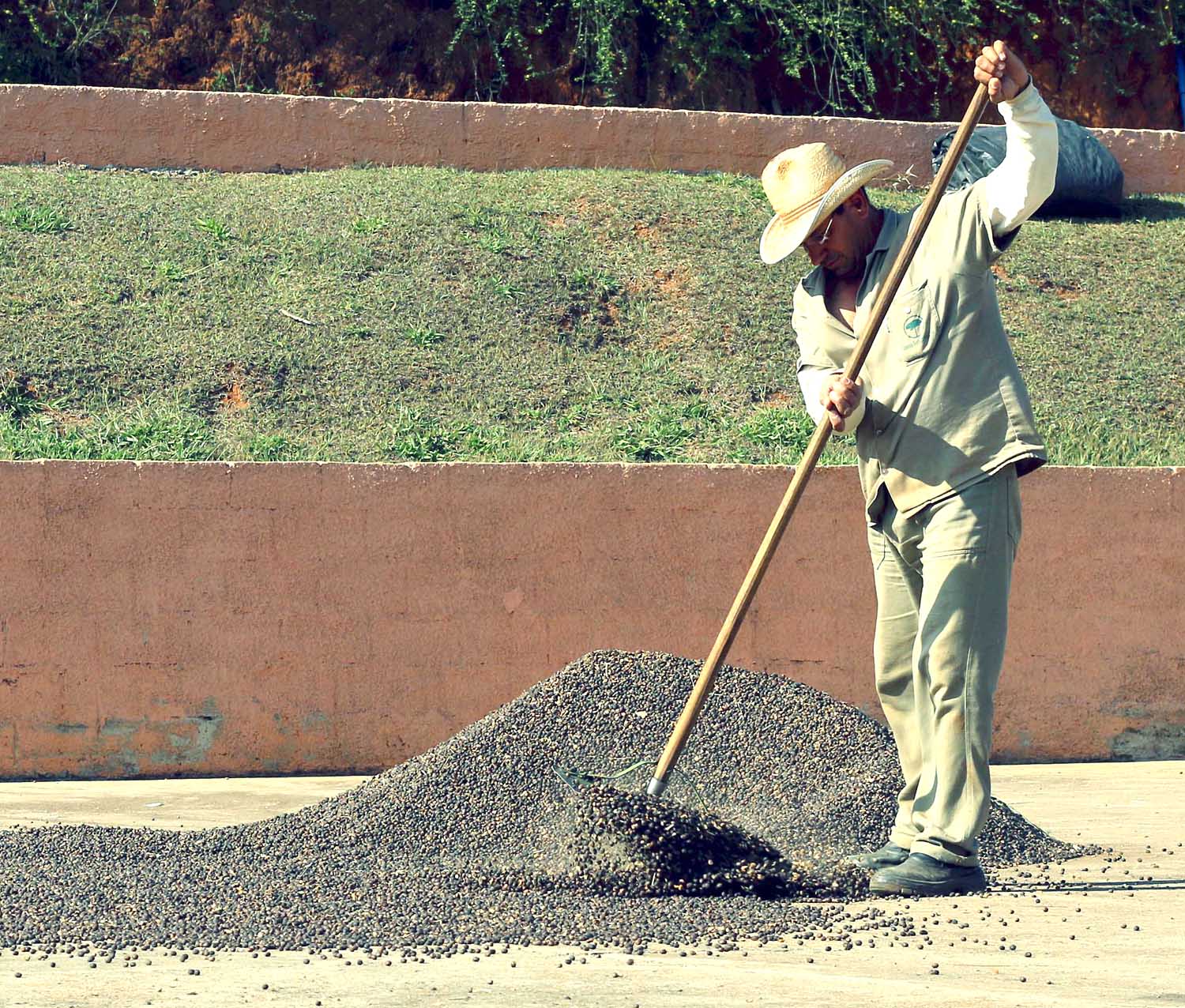
Speaking of pulpy notes, Brazil's’ post-harvest processing is also somewhat unique, and has been adapted largely in response to a combination of productivity, climate, and desired profile: Pulped Natural and Natural processing still dominates the industry here: Pulped Natural coffees are depulped and allowed to dry with their mucilage still intact; while Naturals are typically either dried on the trees before harvesting (called Boya), or picked and laid out on patios in order to finish drying before being hulled. Both processes tend to lend the coffees a nutty creaminess that has a more tempered fruit tone than the bright and acidic Washed or even Honey coffees we see elsewhere from Mesoamerica. The Natural coffees Cafe Imports sources from Brazil are “special prep,” picked ripe and dried on patios to spec.
CAFE IMPORTS + BRAZIL
Our relationship with Brazil can fairly be called more of a love affair: There’s a lot of romance for us in this big, beautiful coffee country, but we are also attracted to the challenges and are always actively seeking new ways to discover, develop, and source quality coffees from our main export partners. We travel to several primary coffee regions a few times every year in the interest of inspecting quality, maintaining relationships, introducing our roaster partners to the magic (and sometimes mayhem) or Brazilian production, and seeking new and “undiscovered” corners where specialty coffee might flourish.
In fact, Brazilian coffee was what started Cafe Imports to begin with: Founder and partner Andrew Miller imported his first container with a Brazilian friend in 1994, bringing in a coffee that would be the genesis of our "signature" Brazil offering, Serra Negra. Since then, countless full-container loads from Carmo de Minas and Mogiana have come through our warehouse, and the quality and diversity that we've seen from various regions and microregions (and micro-microregions!) have inspired the development of microlot programs with some of the country's most innovative producers. In short, we're still madly in love.
In 2017, we are building upon our existing relationships and introducing a new buying opportunity in Brazil with the debut of our Best Cup cupping competition and live auction, hosted for the first time in Carmo de Minas. With its efficient production and massive yields, Brazil is often overlooked as a potential source for microlot coffees: Carmo Best Cup should bring to the fore some of the producers who are focused on putting out smaller quantities of hyperfocused, high-scoring, practically mind-bendingly good coffees from around the region, and we look forward to that level of quality becoming more of a norm than an exception when “Brazilian coffees” comes to a roaster’s mind.
InterAmerican Coffee
Brazil Matas de Minas Fazenda Derrubada
Home / Coffee Bios / Brazil Matas de Minas Fazenda Derrubada
Fazenda Derrubada is a farm in Matas de Minas produced by Raimundo Dimas Santana Filho in Araponga, Mata de Minas. The altitude of this farm is around 1,150 masl and produces yellow catuai and red bourbon. The farm was acquired around 1977 by the Santana family and has been producing coffee since then. In 2001, the farm passed exclusively to Raimundo Dimas Santana (father of Raimundo Dimas Santana Filho). Since then, all of the infastructure has been modified and adapted in order to produce better coffee in a socio-environmental manner. The original property was split into Fazenda Santo Antonio, its original name since 1977, and Fazenda Derrubada, which is ran by Raimundo Dimas Santana Filho.
In its first year, Fazenda Derrubada produced the best coffee in the state of Minas Gerais for "espresso" and was considered the second best in Brazil according to Illy Caffee spa., and has become a reference for other producers in the region.
Today, the farm has 18 full-time employees, 7 living on the farm itself and 11 residing in their own houses in the city. They are guaranteed all benefits provided by Brazilian labor law, including health insurance and worker's compensation, and those who live on the property also receive housing and basic household goods.
Cupping Notes: Clean, good body with notes of lemon, orange, caramel, chocolate
InterAmerican Coffee
Brazil Fazenda Da Lagoa

Even in Brazil, a country with a long coffee tradition, the history of Fazenda da Lagoa is one that stands out. The roots of Fazenda da Lagoa can be traced back to the second half of the eighteenth century when Portuguese settlers built a little chapel on the bank of the Amparo River and put up fences around the area that is today’s farm.
Amongst the settlers was Manouel Ferreira Carneiro. A man of simple means, he built the first house on the farm that prospered to become one of the largest coffee estates in the region. The knowledge of how to produce one of Brazil’s most outstanding coffees has been passed down from generation to generation. Today, Carneiro’s direct descendant Joaquím Paiva is one of the two Managing Directors of the farm.
Fazenda da Lagoa is situated 1,100 meters above sea level near the town of Santo Antonio do Amparo, about 170 kilometers southeast of Belo Horizonte in the province of Minas Gerais. The farm of 2,850 hectares is comprised of a natural reserve, woodlands, pastures, and 1,500 hectares of coffees. Streams from 40 natural springs water the land and gradually converge into two small rivers that mark the borders of the grounds.
This place of exceptional beauty is a haven for diverse flora and numerous animals. To conserve this natural environment and preserve its ecological balance for future generations, all activities on the farm are carefully monitored. Sustainable principles guide all cultivation and processing practices on the farm. By protecting healthy soils and rivers and producing sustainable coffee, Fazenda da Lagoa aims to be an inspiring partner to neighboring rural communities.
At Fazenda Da Lagoa, coffee cultivation is much more than a business – it’s a lifestyle. Several generations have been dedicated to creating excellent coffees for the pleasure of people all over the globe. Only Arabica varieties such as Catuaí, Mundo Novo, Acayá and Catucaí have been selected and are grown on the plantation according to strict sustainable principles.
While Fazenda Da Lagoa honors its 200 year old coffee tradition, it is also known for its innovative farming approach, which employs modern agricultural techniques based on scientific research carried out on the farm.
Cup Characteristics
Well-rounded acidity, pleasant sweetness, good complexity, soft nutty characteristics, chocolate notes
Sul de Minas
Minas Gerais ist einer der brasilianischen Bundesstaaten, in denen die koloniale Vergangenheit des Landes sichtbare Spuren hinterlassen hat; eine Epoche, in der hier Gold und Edelsteine gesucht wurden. Noch heute bezeugt die örtliche Architektur die Geschichte dieser faszinierenden Region als reiches Bergbauzentrum. Der südlichste Streifen heißt Sul de Minas. Er ist bekannt für seine Naturschönheiten, herrlichen Panoramaausblicke, üppig grünen Hügel und sein Mineralwasser;
insbesondere aber für seinen Kaffee, der zu den besten in ganz Brasilien zählt. Fruchtbar ist hier das Land, mild und nahezu konstant die Temperaturen. Die Arabica-Plantagen finden sich auf Höhen zwischen 900 und 1200 m und werden mit viel Rücksicht auf die Umwelt bewirtschaftet. Alle diese Faktoren begünstigen die hervorragende Qualität des örtlichen Kaffees; zu Recht ist er in aller Welt berühmt und vielfach ausgezeichnet.
Adolfo Vieira

Auf der Fazenda Passeio beginnt der Tag wie immer früh. Die Sonne ist gerade erst aufgegangen, doch Adolfo Vieira ist bereits in seinem Büro und sieht von seinem Fenster aus das fleißige Treiben seiner Arbeiter. Die Moral ist gut auf den Kaffeefeldern und die gesamte Plantage summt vor heiterer Geschäftigkeit. Adolfo ist Kaffeepflanzer in vierter Generation, in dritter auf der Fazenda Passeio. Das Gut war einst größer, doch Adolfos Großvater, der aus Portugal nach Brasilien auswanderte, beschloss vor seinem Tod, das Gut unter seinen Kindern aufzuteilen und vermachte diesen Teil Adolfos Mutter. Damals wurde das Land nicht flächendeckend bewirtschaftet, doch mit Beharrlichkeit und Leidenschaft brachten sie und ihr Ehemann es allmählich zum Blühen.
Dieses wunderbare Stück Erde ist reich und fruchtbar. Hier, auf zirka 1200 m, wachsen die Pflanzen dank des charakteristischen Mikroklimas nur langsam und verleihen dem Kaffee eine außerordentliche Süße. Ein Geschmack, der weltweit viele Verbraucher verführt hat - auch Adolfo, der mehrmals täglich genussvoll seinen Espresso trinkt.
Auch jetzt genießt er einen Espresso, während er vom Büro aus die Plantage betrachtet: Die sattgrünen Felder leuchten in der Sonne und im Patio sind einige Arbeiter damit beschäftigt, die Kaffeekirschen zu waschen. In der Ferne kann man die Gipfel der Bäume ausmachen, die zum Gedenken an die zehnjährige Kooperation der Fazenda mit illy gepflanzt wurden. Seit drei Jahren pflanzt jeder Besucher des Gutes dort einen Strauch zur Erinnerung an seinen Besuch, um sich auf diese Weise bei der Erde zu bedanken und ihr etwas zurückzugeben.
Via Flavia 110, 34147 Trieste, Italy, Register of Companies of Trieste - registration number and VAT code IT00055180327, share capital € 50.000.000,00 fully paid
NKG Fazendas Brasileiras Ltda.
Rodovia Fernao Dias
Santo Antonio do Amparo
Fax: +55 - 35 - 3863 2999
The Fazenda da Lagoa coffee plantation.
. is situated in the northeastern part of the famous coffee growing region of Sul de Minas, in Minas Gerais, only a few hundred kilometers away from São Paulo and Rio de Janeiro, at an altitude of around 1,100 meters above sea level.


It is in this fertile area that an Arabica coffee renowned for its exceptional quality and unique taste is grown. Fazenda da Lagoa focuses on the production of a unique unwashed natural coffee and a high quality semi-washed coffee.
Abnehmen mit grünem Kaffee – wie geht das?


Grüner Kaffee Extrakt von Zyra Vital hat in unserem Test am Besten abgeschnitten. Wir konnten mit dem Produkt bis zu 12 Kilo in 8 Wochen abnehmen. Die positiven Produktbewertungen die man im Internet finden kann sprechen ausserdem für das Produkt. Es gibt auch andere vergleichbare Produkte auf Grundlage von grünem Kaffee allerdings ist der Grüne Kaffee Extrakt von Zyra Vital vom Preis-Leistungsverhältnis exzellent und besitzt den höchsten Anteil Wirkstoff in einer Kapsel. Da das Produkt auf pflanzlicher Grundlage basiert bleiben Nebenwirkungen in der Regel aus.
Den Grünen Kaffee Extrakt von Dr. Hittich haben wir ebenfalls auf seine Wirksamkeit bewertet. Dieses Produkt wird derzeit verstärkt in Zeitschriften und im Internet beworben. Bei dem Produkt handelt es sich um ein Produkt mit reinem Grünem Kaffeeextrakt. Hierbei sind 400mg Wirkstoff mit 50% Chlorogensäure in 30 Kapseln enthalten; eine Packung kostet 39,70€.
Vergleicht man das Produkt mit unserem Testsieger Zyra Vital stellt man schnell schwerwiegende Schwächen fest: Zyra Vital enthält 200 mg Wirkstoff mehr pro Kapsel, enthält 60% HCA und eine Packung enthält 60 Kapseln. Preislich liegen beide Präparate gleich, Zyra Vital ist 20 Cent teurer pro Packung. Der Preis pro Kapsel ist allerdings gravierend: Dr. Hittich Grüner Kaffee kostet 1,32€ pro Kapsel während Zyra Vital bei mehr Wirkstoff nur 0,66€ kostet. Ein Kauf will wohl überlegt sein. Wir raten zu unserem Testsieger Zyra Vital.

Marie hat Zyra Vital getestet und insgesamt knapp 17 Kilo an Gewicht verloren. Und das ohne Nebenwirkungen und ohne Jojo-Effekt. Den ganzen Test können Sie hier lesen:
Vorteile von grünem Kaffee
- Chlorogensäure die in grünen Kaffeebohnen enthalten ist, vermindert die Aufnahme von Zucker ins Blut.
- In Verbindung mit 18 anderen Aminosäuren verringert Chlorogensäure den Bluttfettspiegel (Triglyceride und Cholesterin).
- Verringert Hungergefühl und beugt somit der Aufnahme überflüssiger Kalorien vor.
Wieso hilft grüner Kaffee beim Abnehmen?
Da durch die enthaltenen Bestandteile im grünen Kaffee die Aufnahmefähigkeit von Zucker verringert wird, hat der Körper einfach weniger Glukose das als Fett eingelagert werden kann.
Gibt es Beweise für die Wirksamkeit?
Ja die gibt es. Es gibt mehrere Studien die zum Abnehmen mit grünem Kaffee durchgeführt wurden. Eine der bekanntesten Studien wurde im März 2012 von amerikanischen Wissenschaftlern an übergewichtigen Personen durchgeführt.
Die Personen wurden in drei Gruppen eingeteilt. Jede Gruppe bekam unterschiedlich viel grünen Kaffee zur Einnahme, aber die Essgewohnheiten blieben gleich. Der Test lief 6 Wochen lang und am Ende konnte folgendes beobachtet werden:
- die Gruppe die keinen grünen Kaffee bekam, sondern ein Placebomittel nahm 0,32 Kilo in den 6 Wochen zu.
- die Gruppe die eine niedrige Dosis grünen Kaffee bekam nahm 1,54 Kilogramm ab.
- die Gruppe die eine mittlere Dosis grünen Kaffee einnahm, nahm ganze 2,04 Kilo ab.
Durch diese Studie wurde erstmals erwiesen, dass grüner Kaffee einen positiven Effekt auf den Gewichtsverlust hat. Ausserdem wurde herausgefunden, dass der Extrakt aus grünen Kaffeebohnen sich senkend auf den Blutdruck auswirkt und sogar Alzheimer vorbeugen kann.
Übrigens besitzt grüner Kaffee weit weniger Koffein als regulärer Kaffee den viele Menschen gerne trinken.
Was ist grüner Kaffee eigentlich?

Wie kann ich mit grünem Kaffee erfolgreich abnehmen?
Keine Angst, Sie müssen die Kaffeebohnen nicht kauen oder einzeln schlucken. Es gibt viele Präparate auf dem Markt, die die Extrakte der grünen Kaffeebohne in Kapselform anbieten. Diese Kapseln enthalten unterschiedlich viel Wirkstoff (Chlorogensäure) und sind deshalb unterschiedlich in ihrer Effektivität und auch im Preis. Man sollte auf jeden Fall auf einen hohen Anteil an Wirkstoff achten (60% minimum).
Die Einnahme ist ganz einfach: Die Kapseln werden unzerkaut mit Wasser geschluckt, in der Regel zwei Kapseln pro Tag. Die Essgewohnheiten müssen in der Regel nicht geändert werden, jedoch wirkt sich eine gesunde Ernährung und Sport positiv auf den Gewichtsverlust aus. In keiner Studie durften die Probanden ihre Essgewohnehiten oder ihren Tagesablauf ändern. Daher sind die Ergebnisse der Studien unverfälscht und geben den durchschnittlichen minimalen Gewichtsverlust wieder.
Mein Erfolgsergebnis mit Zyra Vital
Ich habe das Grüne-Kaffee-Präperat selbst für 3 Monate getestet. Vor Beginn meines Tests habe ich ein vorher Bild geschossen (links) und nach ungefähr drei Monaten ein aktuelles Bild von mir im Bikini (rechts). Ich habe mich vor dem Test leider nicht gewogen, da ich Jahrelang unter meinem Gewicht litt und mich selbst zu wiegen eine große Belastung war.

Am Ende der drei Monate habe ich ungefähr 15 bis 20 kg an Gewicht verloren und der Jojo-Effekt ist bis jetzt auch ausgeblieben.
Ich muss dazu sagen, dass dies nicht mein einziger Abnehmversuch war. Ich habe unter anderem auch schon Weightwatchers, Almased und Yokebe aus der Apotheke ausprobiert, aber keine dieser Mittel hat irgendetwas zu meinem Gewichtsverlust beigetragen. Alle Präparate die ich bis jetzt ausprobiert habe, haben mich seelisch zudem sehr belastet. Nach jedem Versuch habe ich innig gehofft Gewicht zu verlieren und nach dem Gang auf die Wage war ich immer total fertig mit der Welt und komplett unmotiviert. Teilweise bin ich in Depressionen gefallen und habe allehand verschiedener Süssigkeiten in mich hinein geschlungen.
Mein Hauptproblem bei den meisten Diäten und Abnehmmittel war das Hungergefühl. Mit Hunger bin ich nicht leistungsfähig und kann mich einfach nicht konzentrieren geschweigedenn Sport treiben. Mit der Zyra Vital-Diät haben sich aber beide Probleme (Heisshunger / Hungergefühl und Lustlosigkeit) aufgelöst und ich habe zum ersten mal in meinem Leben abgenommen. Vielleicht habe ich nur 5 Kilo pro Monat abgenommen, aber damit bin ich zufrieden. Alle anderen Mittel versprechen das doppelte an Gewichtsverlust und liefern einfach überhaupt keine Ergebnisse.
Wie konnte ich abnehmen?
Die Anwendung ist kinderleicht. Zu jedem Frühstück eine Kapsel mit einem großen Glas Wasser, jeden morgen. Ich habe wie sonst auch normal gefrühstückt und bis Mittags keinerlei Hungergefühl gehabt. Mittags natürlich etwas kleines gegessen, aber ich habe dort etwas auf meine Kalorien geachtet. Abends habe ich ein leichtes Abendessen zu mir genommen (Brot, Müsli, Joghurt, Obst, Gemüse). Diese Anwendung habe ich für drei Monate bis jetzt gemacht und ich hatte zu keiner Zeit Nebenwirkungen. Zyra Vital ist übrigens im Herstellershop billiger als andere Abnehmprodukte (knapp 39 Euro für eine Flasche, bei 3 Flaschen sinkt der Preis auf etwa 30 Euro).
36 thoughts on “ Abnehmen mit grünem Kaffee – wie geht das? ”
Ich kenne lediglich die Variante mit grünem Tee.
Ich kann nur den Rat geben, dass frischer Ingwer in Kombination mit Brenesseltee sehr gut funktioniert. Eher zufällig bin ich auf dieses Getränk gekommen und ich bin davon richtig fasziniert.
Hallo, hilfreicher Artikel. Ich konnte die meisten Sachen gut nachvollziehen. Viele Grüße M
Neues Produkt Pure Cambogia
Würde hierzu gerne ihre Meinung wissen als Zusatz muss einige Neuroleptikas nehmen wo ich in ca. 40 Wochen über 20 kg Zugs habe . Bis jetzt trotz Sport etc keine Erfolge
Was mich interessieren würde: ist die Zubereitung des Bio-Kaffees bei herkömmlichen Kaffeemaschinen wie hier denkbar oder sollte man für die Bohnen spezielle Geräte hernehmen?
Also ich habe mit grünem Kaffee nur gute Erfahrungen gemacht!! Habe damit innerhalb von zwei Monaten knapp 12 Kilo abnehmen können und das ist bei mir schon viel! Nebenwirkungen hatte ich keine, allerdings musste ich die Kapseln morgens schlucken weil ich ansonsten irgendwie Abends schlechter einschlafen konnte. LG Lena
Habe mir Slimsona nach langer Recherche im Internet vor zwei Wochen bestellt und habe die erste Packung halb leer. Ich muss sagen das ich schon 4 Kilo abgenommen habe und TOP FIT bin, ich könnte echt BÄUME AUSREISSEN! 🙂 Also mir gefällt die “Diät” bis jetzt echt gut und habe es schon in meinem Bekanntenkreis weiter empfohlen. Ich hatte vorher Almased und Weight Watches ausprobiert, alles nur mit kurzfristigem Erfolg. Hoffe mit dem Slimsona funktioniert das jetzt besser. Bis jetzt bin ich echt zuversichtlich!!
Kann mir jemand sagen wie lange der Versand bei Slimsona ungefähr dauert?? Danke!!
Hallo Rudolf bei mir hat es 4 Tage gedauert Montag bestellt und Donnerstag da kann es nur empfehlen. Beate
Wollte mir gerade das Slimsona bestellen weil ein Kollege es mir empfohlen hat, aber da steht jetzt das es ausverkauft ist? Wisst ihr da mehr? Wo kann ich es noch herbekommen? Danke im Vorraus für eure Antworten…
Habe mir Slimsona über ebay bestellt und kann nur sagen FINGER WEG, da sind betrüger unterwegs… die flasche sieht ganz anders aus als auf der richtigen seite und die kapseln waren schwarz. habs mir jetzt mal im richtigen shop bestellt, da bekomme ich hoffentlich das richtige. also achtung leute wo ihr das bestellt!
kann zyravital nur empfehlen. habe zyravital getestet und gute erfahrungen damit gemacht. es stillt den appetit und lässt meinen hüftspeck schrumpfen. bin schon beim 3. monat nun angelangt… lg mareike dietz
Grüner Kaffee hilft wirklich beim abnehmen ABER nur WENN der Anteil an der Kaffeesäure auch hoch ist! Niedrigdosierte mittel helfen nicht… alles bis 40% ist Mist!! Bin mit Zyra Vital (60%) sehr zufrieden da es wirklich gut verträglich ist aber immernoch gut funktioniert.
Danke für die guten Tests und die tollen Berichte auf der Seite. Diese haben mir viel Mut gemacht mein Übergewicht anzugehen und endlich einen Körper zu bekommen mit dem ich mich wohl fühle!
ein schön guten morgen ich nehme seit ca 2 wochen grüner kaffee ein ich habe 2.5 kilo ab genommen in kurzer zeit gabriele
Kein Schimmel und schnelle Lieferung.
Ich habe schon so vieles ausprobiert,aber nichts von Dauer.
Ich nehme die Kapseln jetzt 3 Wochen und habe 2,5kg abgenommen,fühle mich gut und keine Heisshungerattacken.
Bin gespannt,wie es weitergeht.
Nehme sie auch und habe bis jetzt guten Erfolg habe Ernährung umgestellt und mache Sport bin mit drei kapseln täglich bei 114 Kilo auf 98 bin begeistert von dem Produkt
Danke für den umfangreichen Artikel!
Obs hilft muss wohl jeder selbst für sich erfahren, ist aber einen Versuch wert finde ich!
Hi, kann mir jemand sagen ob die kapseln Koffein enthalten? Habe eine Herzschwäche u kann deswegen wenig Koffein vertragen.
Huhu wie wa das mit der Bezahlung stimmt das man einmalig 19,70 zählt und den 2 Monat gratis.
ich hätte da mal ne Frage zu eurem Testsieger weil mir da was Spanisch vor kommt. Originaltext vom Bericht:Der Preis pro Kapsel ist allerdings gravierend: Dr. Hittich Grüner Kaffee kostet 1,32€ pro Kapsel während Zyra Vital bei mehr Wirkstoff nur 0,66€ kostet. Ein Kauf will wohl überlegt sein. Wir raten zu unserem Testsieger Zyra Vital. So jetzt Original von der Zyra Vital Homepage:Mit unserer Start-Kur für einen Monat können Sie bis zu 8kg Gewicht verlieren. Und das für nur umgerechnet 1,33€ pro Tag.
Mit unserer Profi-Kur für drei Monate erreichen unsere Kunden die besten Ergebnisse. Und das für nur umgerechnet 0,99€ pro Tag. Meine Frage wo sind Eure 0,66€ pro Tag oder hat Zyra Vital gemerkt das Sie zu Günstig sind.
Ich meine es freut mich von so vielen tollen Ergebnissen zu lesen und überlege es mich auch zu holen allerdings interessiert mich wie der Preis so Rapide gestiegen ist.
Eine frage ich nehme die pille kann sie doe wirksamkeit verlieren ??
Ich habe cafeform genommen eine Woche lang. Habe weder abgenommen, noch hat mein Hunger aufgehört. Mein Mann hat ebenfalls mitgemacht. Er hat sogar zugenommen, obwohl er weniger gegessen hat als sonst. Wir essen immer ausgewogen und machen Sport. Daran kann’s also auch nicht liegen. Ich bin sehr enttäuscht, dass man so betrogen wird.
Habe am 26.6 Zyra Vital Grüner Kaffee Kapseln bestellt und Geld überwiesen an 2000 Charge Gmbh, habe bis heute noch nichts erhalten. Wie lange dauert die Lieferung? Weiss das jemand?
habe mit meiner frau für viel geld diätpillen grüner kaffee von dr. hittich gekauft und eingenommen wie es beschrieben wurde die wirkung war null kilo abnehmen ,es ist eine glatte betrügersache wir können nur jeden abraten sich dieses zeug zukaufen nur eine verarschung
Zyra Vital ist echt top!! mein mann und ich haben wirklich einige kilos runter… und das nach nur 3 wochen! sehr gut!!
Wo kann ZYRA Vital bestellen.?
Ich nehme Caform seit 14 Tagen und habe nicht 1 gramm abgenommen , das ist nur Betrug und Geldschneiderei
Ludwig: Caform enthält auch nur wenig von dem Grünteextrakt. Ich glaube nur 10%. Damit man effektiv abnimmt damit braucht es über 40% gehalt vom Extrakt. Das ist also Blödsinn mit Caform kann das nicht funktionieren, dann mach lieber Ingwertee..
ich habe auch zyra vital ausprobiert.
Bin sehr begeistert endlich ein produkt das wirkt
so positiv beworben bringt was es verspricht.
Lasst bitte die Finger von CAFE FORM! Betrug und Reine abzocke!! Hab die Dinger geschluckt ( null Gewichtsabnahme!) ständig Kopfschmerzen und nachdem ich die nach 3 Wochen abgesetzt habe, habe ich eine extreme Unruhe in mir und einen starken Druck im Brustkorb. Finde jetzt auch plötzlich Web Seiten, die vorher leider nicht auffindbar waren und die Abzocke bestätigen! Zyra Vital scheint da die bessere wahl zu sein weil es aus deutschland kommt!
Also ich muss echt sagen, dass Zyra Vital mir wirklich viel gebracht hat und mich bei meiner diät super unterstützt hat. 😉
Darf ich die nehmen wenn ich schwanger bin ?
ich habe frage und zwar wann soll ich die Kapsel nehmen vorm essen oder nach dem essen und wieviel mal in tag 2 mal in tag also gleichzeiten 2 kapsel nehmen oder eine morgen und eine abends?
Ich habe mir zum Test 50 Kapseln von Lyra vital bestellt. Musws aber leider feststelle dass die 600 mg in der Werbung nicht korrekt sind. Laur Inhaltsstoffangaben sind nur 400 mg enthalten. Daher ist die Werbung ganz eindeutig Betrug. Werde mich mit der mBeschwerde an den Verbraucherverband wenden.
ich denke das ist kaffee ihr sprecht aber alle nur von pillen die man schlucken muß.hm hm wie soll ich das verstehen ?
hallo falki says in der werbung spricht man aber nicht von pillen sage die extra sondern von kaffee flußig so wie man kaffee kennt was ist denn dadran nicht richtig .
Coffee
Division : Magnoliophyta - Class : Magnoliopsida - Order : Rubiales - Family : Rubiaceae
tree Edit
These are one year old plants at a nursery in northern Thailand.
Detail of Coffea canephora branch and leaves
flowers Edit
Coffee Flowers (Coffea arabica) in Plantation of Brazil
Coffee Flowers Show (Coffea arabica) - Matipó City - Minas Gerais State - Brazil
Coffee blossom tea
fruits Edit
Coffee(Coffea arabica) branch with immature fruit - São João do Manhuaçu City - Minas Gerais State - Brazil
Yellow Bourbon Coffee, a variety of Coffea arabica - São João do Manhuaçu City - Minas Gerais State - Brazil
Red Catucaí Coffee, a variety of Coffea arabica - Matipó City - Minas Gerais State - Brazil
Red Catucaí Coffee detail, a variety of Coffea arabica - Matipó City - Minas Gerais State - Brazil
Red Catucaí Coffee, a variety of Coffea arabica - maturation in different stage - Matipó City - Minas Gerais State - Brazil
Yellow Catuaí Coffee, a variety of Coffea arabica - Manhuaçu City - Minas Gerais State - Brazil
Coffee fruits on the tree
plantations Edit
World map of coffee plantations.
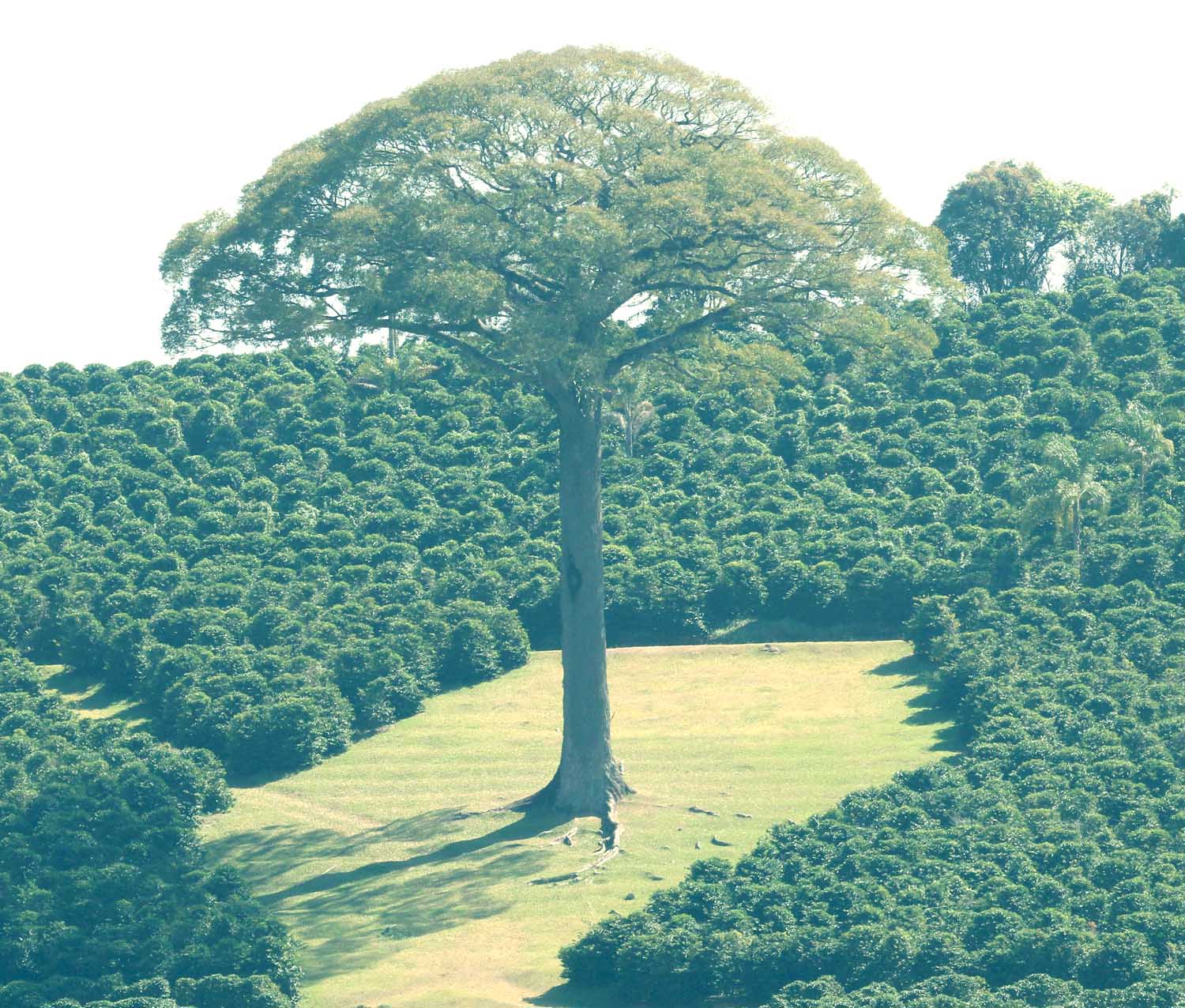
Coffee Plantation in São João do Manhuaçu City - Minas Gerais State - Brazil
Shelling the coffee cherries
Structure of a coffee bean (vectorized Language neutral version)
Structure of a coffee bean (English caption)
Unroasted coffee(COFFEA ARABICA) beans
Unroasted coffee(COFFEA CANEPHORA - Conilon/Robusta) beans
Unroasted coffee beans
Coffee roasting grades
Roasted Coffee Beans
Roasted Coffee Beans in Venezuela
Coffee drying in the sun
Coffee processing aquapulp
Coffee Fermentation Bins
Coffee sorting in water
Dried green coffee with parchment
Coffee Patio Dried
Woman coffee farmer with basket of coffee beans in Ethiopia
Arab women grinding coffee in Palestine
Coffee beans being sorted and pulped
Green coffee in bags
The price of coffee
Preperation of Turkish Coffee
An espressomaker for home use.
A moka coffee pot
A moka pot in parts
Diagram of a moka coffee pot
Moka pot in action.
Coffee pot with fountain-top.
French Press, Press pot, Cafetière
Indian filter coffee
A silver coffee pot from 1720
A vacum brewer boiling up
A vacum brewer going north
A vacum brewer finishing
A vacum brewer disassembled
Vacpot going north, diagram
Wall coffee grinder, 19th-20th Century
Einfache blaue Kaffeemaschine von Alaska
LaCimbali M32 Bistro DT/1
My moka coffee machine
Espresso Tamper im Einsatz
verschiedene Espresso Tamper
Brewing with Aeropress
Semi Automatic Espresso Machine.jpg
Drip coffee at a specialised drip coffee shop in Bangkok, Thailand
A small cup of coffee
Espresso in glass cups - 2 half cups
Another cup of Espresso (a double)
Hot Vietnamese coffee with condensed milk - Cà phê sữa
Vietnamese milk coffee iced (Cà phê sữa đá)
German "Kaffee mit Sahne"
Kaffee in Porzellantasse mit Silberlöffel
Cup of Coffee with Foam
Cup of Coffee with Spices
Cup of Coffee with Whipped Cream
Wiener Melange - Half espresso, half hot frothy milk
Cappuccino with a "leaf" poured into it (latte art)
Another example of latte art
High-speed capture of coffee blown out of a straw
French "petit noir"
Café frappé in a glass
Milchkaffee, Café au lait
Fresh coffee with Hungarian hand made painted cup
A doppio ristretto served in two separate glasses
Elaborate latte art
"Rosetta" perfection in a cappuccino
Latte art elephant
Coffee with Asbach-Uralt (Rüdesheim am Rhein only)
Enjoying a latte in May 2006
A coffee house in Palestine
The Café in the Museum of Scotland in Edinburgh
New York Kávéház, Budapest, Hungary
Dornbirn Marktplatz Kaffee Steinhauser + Feuersteinhaus, Germany
Aroma on Hilel Street, Jerusalem - Point of Sale
Artists at All City Coffee 25, Pioneer Square, Seattle
Coffee and newspaper in a typical Vienna Kaffeehaus
Roman amphitheater of Nîmes ,
Café Deux Mulin
Coffee shop at Koh Kred
Star-Bucks_Tenmabashi Shop in Japan
Cafe De Tempelier, Nijmegen
Breakfast Special from Chūkyō in Japan
Coffee consumption per capita and year
Wilhelm Schreuer : Das Kaffeetrinken am Flussufer
"Kahve Keyfi" (Coffee Delight), unknown artist, early 18th century.
Emile Eisman-Semenowsky, Dame mit Kaffeetasse
Coffee house in Palestine, 1900
Kaffee türkische Art: Szene über dem Eingang zu Europas ältestem Kaffeehaus in Leipzig
Lesser Ury: Mädchen im Romanischen Café (Berlin), 1911
Lesser Ury: Junges Mädchen im Kaffee mit Straßenblick, 1924
William Orpen, The Café Royal, London, 1912
Vincent van Gogh (Dutch, 1853–1890), "The Night Café", 1888
ABOUT KAFFEE
The Krohling family immigrated from Germany (Suzhein, Rheinland Pfalz) in the nineteenth century. The family activities in the coffee business started in the agriculture, forming coffee plantations . While experiencing adverse conditions for growing like extremely steep topography, humid and rainy climate and rudimentary technology, persistence and hard work of the entire family were prevalent in the culture of the first coffee plantations in the Mountains region of Espirito Santo.
Provide better storage conditions, processing and trading by the coffee producers in the region were the main reasons for the creation of a trading company to deal with coffee green beans. In this context is founded Caffeeira Krohling LTDA. Currently operating with different types of coffee, the company became supplier of coffee for the top industries roasting of Brazil.
The Kaffee is located in Santa Maria – Marechal Floriano in the state of Espirito Santo, located in the Southeast, the most developed region of Brazil.
Inside the coffee business, the state of the Holy Spirit plays a prominent role. It is the second largest coffee producer in Brazil (the first is Minas Gerais) and the largest robusta coffee producer (Conilon).
INSTALLATIONS
The Kaffee has a complete structure for receiving, processing, storage, transportation and export of coffee. In the receiving phase, the company has a warehouse with a capacity of 250,000 bags of 60 kg. At this stage, the quality of coffee entering to the company is verified in our own laboratory, it is generated a classification and assigned to the appropriate storage location for that type of coffee.
WHAT WE DO?
Products offered by Kaffee to the international market are:
Most coffee processed by Kaffee is turned to the foreign market. Coffee is sold to foreign importers and roasters of many countries all over the world. A percentage of the coffee is sold on the domestic market to other exporters and roasters.
CONTACT US!
Some ways to contact us. We will be happy to answer each contact or welcome them for have a coffee.
Kaffee - All rights reserved. Developed by Maurício Faccin
The Global Coffee Platform
Reducing overlap and fragmentation by convening 200+ public and private sector members and partners to drive farmer-centric programs and policies
Increasing the scale and impact of sustainability investments and initiatives by facilitating collective action to address the biggest issues together
Allocating resources efficiently and achieving more meaningful change by enabling the analysis of individual and collective performance and the exchange of lessons, best practices, news, and practical tools
The latest news and events from the Global Coffee Platform
GCP Represents its Members at Sintercafé XXXI
GCP partnership with Minas Gerais shows its first results
GCP provides financial literacy support to SARIBUMI farmers
Take the next step
Join GCP's global network of members working together to build a sustainable coffee sector
Get in touch
Adenauerallee 108 53113 Bonn Germany
info [at] globalcoffeeplatform.org
© 2017 The Global Coffee Platform


Комментариев нет:
Отправить комментарий