


Search for poetic places in your area or next travel destination!
Location


In our "Explore" section you can either search with a keyword or use our "locate me" tool . You can also filter the results by checking or unchecking different categories. Of course you can also navigate and explore our map by just clicking on icons or countries.
We really love to learn more about your own poetic places. To share them click the "share" -tab, fill in some details to make it easier for others to find your place. You can use the "locate me“ tool (little round icon next to the adress field) if you are currently at the specific place you want to share. Upload a photo (if you have one) and choose a category – now you are ready to inspire others!
If you have any questions regarding our Poetry Map please contact us at poetrycafe@meinl.at.
Conditions of participation
The game is held by Julius Meinl Industrieholding. By participating in this game, the participant agrees to the following terms and conditions. The masculine form used in the following shall also include female participants and vice versa.
1. Registration and conditions of participation
1.1 Participation is open to everyone sharing content on the website map.poetrycafe.com and stating their email address; participation is subject to the following conditions.
1.2 Only persons of at least 18 years of age are allowed to participate. Legal representatives and staff members of Julius Meinl and companies belonging to the same group as well as other companies involved with the participation of this game are not allowed to participate. Participation via sweepstake associations and automatic services is also excluded.
1.3 The game starts on 1 August 2013 at 12:01 a.m. and the closing date is on 20 September 2013 at 11:59 p.m. Participation is only possible if a valid email address is given. The winners are notified via email. Upon participation, each participant agrees that his name is published on the internet at www.poetrycafe.at and www.facebook.com if he wins. This consent can be revoked at any time via email to empfang@meinl.at or per letter to Julius Meinl Industrieholding, Julius Meinl Gasse 3-7, 1160 Vienna, Austria, Re: Poetry Map. For the drawing of the winner and the organization of the winner trip, indicating the name, street, house number, postcode, and the place of residence of the winner is required.
1.4 The game must be played within the sweepstake-period. Submissions made outside this period are not taken into consideration.
The prize draw is performed randomly. The winner is informed via email and is asked to communicate his name and shipping address. If the winner fails to reply within 14 days of receipt of the winning notification [or if he does not communicate his name or his address according to section 1.3 within this period], the claim to the prize is forfeited and a new winner is determined.
1.5 Julius Meinl reserves the right to cancel or terminate the sweepstake, for example if a proper conduction of the sweepstake can no longer be guaranteed for technical reasons (manipulation or error in the hard and/or software) or for legal reasons. Cash payments or the exchange of the prize are not possible. The prizes are not transferable.
Recourse to the courts is not permitted. The game is governed by the laws of the Republic of Austria.
1.6 Winnings and delivery
Within the framework of the sweepstake, the following prizes are raffled:
- 1x 4-day city trip to Barcelona for two persons
26 results for julius+meinl
Save julius+meinl to get e-mail alerts and updates on your eBay Feed.
Unfollow julius+meinl to stop getting updates on your eBay feed.
You'll receive email and Feed alerts when new items arrive.
Items in search results

New listing Julius Meinl 001-Chocolate paper picture packaging Chocolate Wrapper
- £0.88
- 0 bids
- + £3.25 postage

Julius Meinl Julius Meinl Espresso Wiener Art Coffee beans, 100% Arabika, 1000 g
- £59.30
- + £35.00 postage
New listing Julius Meinl 002-Chocolate paper picture packaging Chocolate Wrapper
- £0.88
- 0 bids
- + £3.25 postage
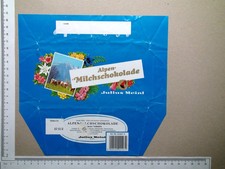
New listing Julius Meinl 003-Chocolate paper picture packaging Chocolate Wrapper
- £0.88
- 0 bids
- + £3.25 postage

Julius Meinl Julius Meinl Prasident Blend Coffee beans, 100% Arabica, 500 g
- £29.20
- + £35.00 postage
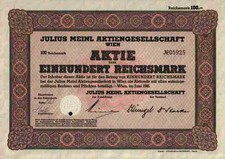
New listing Julius Meinl Vienna 1941 Prague Warsaw Bucharest Agram Mohr Tea Coffee 100 RM sh.
- £30.79
- + £3.52 postage

New listing Julius Meinl 1940 Vienna Prague Warsaw Bucharest Agram 500 RM Straw Rum Coffee T.
- £21.11
- + £3.52 postage

New listing Julius Meinl Vienna 1000 RM Prague Warsaw Bucharest 1941 Agram Mohr Tea Coffee T.
- £39.58
- + £3.52 postage

Julius Meinl AG Vienna 1940 Prague Warsaw Bucharest Agram 100 RM Meinl Mohr Coff.
- £19.35
- + £3.52 postage
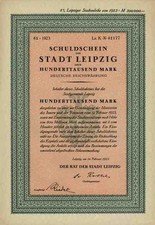
Julius Meinl Vienna 1940 Prague Warsaw Bucharest Agram 1000 RM Meinl Mohr Coffee
- £22.87
- + £3.52 postage

Victorian Trade Card JULIUS MEINL'S CHOCOLATE COCOA Franz Schubert Abschied
- £21.82
- + £11.67 postage
Victorian Trade Card JULIUS MEINL'S CHOCOLATE COCOA Franz Schubert Der Jaeger
- £21.82
- + £11.67 postage
Julius Meinl Vienna Coffee-import of Otto exinger HISTOR. Poster Design Tee 1937
- £24.19
- + £5.72 postage
Antique Tin Tins Meinl Tea Julius Meinl
- £47.49
- + £11.00 postage
Croatia Croatia MNH ** 2017 1097 World Poetry Day Julius Meinl
- £1.06
- + £0.97 postage
Photography Truck Mercedes Benz, Truck Flatbed Julius Meinl Coffee and Tea
- £17.59
- Free Postage
1932 Press Photo Michiko Tanaka, Wife of Julius Meinl, Austrian Coffee King
- £11.77
- + £10.37 postage
Croatia Croatia MNH ** 2017 1097 KB World Poetry Day Julius Meinl
- £6.95
- + £3.43 postage
Brekina Starline 58008 Steyr 380 & 480 " Julius Meinl " HO 1:87 NEW
- £29.14
- + £1.80 postage
Julius Meinl Coffee Präsident Whole Beans - 500g
- £13.01
- Postage not specified
Julius Meinl Cafe Gourmet -2.3 lb bag Roasted coffee beans
- £14.82
- Postage not specified
Julius Meinl Tea Tea Assorted Varieties - 20 Tea Bag 40g NEW/OVP
- £6.15
- Postage not specified
Julius Meinl Coffee Präsident Whole Beans - 500g
- £13.01
- Postage not specified
Julius Meinl Julius Meinl Prasident Blend Coffee beans, 100% Arabica, 500 g
- £29.20
- + £35.00 postage
Antique Vintage Julius Meinl tin box coffee - tea-cookie VIENNA AUSTRIA Rare
Antique Vintage Julius Meinl tin box coffee - tea-cookie VIENNA AUSTRIA Rare
Кофе в зернах Julius Meinl 1862 Premium Aroma Fez упаковка 3 кг
- £155.70
- + £5.66 postage
Кофе в зернах Julius meinl Поэзия 1 кг
- £41.19
- + £5.66 postage
JULIUS MEINL KAFFEE | Espresso Wiener Art | Bohne | 1 kg (€ 1,59 pro 100 g)
- £13.99
- + £18.03 postage
Чай Julius Meinl Венский Десерт (Viennese Dessert) 100 гр
- £7.29
- + £5.66 postage
Чай Julius Meinl Лаунж (Lounge) 100 гр
- £5.83
- + £5.66 postage
Чай Julius Meinl Екатерина 100 гр
- £7.29
- + £5.66 postage
Чай Julius Meinl Ганпаудер (China Gunpowder) 100 гр
- £7.29
- + £5.66 postage
Чай Julius Meinl Грейпберри (Grapeberry) 100 гр
- £7.29
- + £5.66 postage
Кофе молотый Julius Meinl Президент President 500 гр
- £11.25
- + £5.66 postage
Кофе молотый Julius meinl Юбилейный упаковка 250 гр.
- £6.62
- + £5.66 postage
Кофе молотый Julius Meinl Президент упаковка 250 гр
- £6.09
- + £5.66 postage
Чай Julius Meinl Намасте (Namaste Chai) 100 гр
- £7.29
- + £5.66 postage
Чай Julius Meinl Ройбош Восходящее солнце (Rooibos) 100 гр.
- £9.24
- + £5.66 postage
Чай пакетированный Julius Meinl Ванильный 25 шт.
- £5.61
- + £5.66 postage
Чай пакетированный Julius Meinl Фруктовая симфония 25 шт
- £5.61
- + £5.66 postage
Чай пакетированный Julius Meinl Мята (Pepprmint) 25 шт
- £5.61
- + £5.66 postage
Чай черный Julius Meinl Дарджилинг Монтевиот 100 гр
- £7.94
- + £5.66 postage
Чай Julius Meinl Ромашка (Camomile) 100 гр.
- £7.94
- + £5.66 postage
Чай зеленый Julius Meinl Генмайча (Japan Genmaicha) 100 гр
- £7.29
- + £5.66 postage
Чай Julius Meinl Китайский Жасмин 250 гр
- £16.19
- + £5.66 postage
Чай зеленый Julius Meinl Жасминовые жемчужины 100 гр
- £17.66
- + £5.66 postage
JULIUS MEINL KAFFEE | Jubiläumsmisch ung | Bohne | 500g (€ 1,78 pro 100 g)
- £7.83
- + £15.39 postage
Photo AK Hart Mountain Styria, Market Square, bookstore, Shop. - 10147670
- £9.32
- Free Postage
Original Vintage Poster Meinl Tee Otto Exinger Vienna 1928 Tea China
- £1,111.89
- + £46.81 postage
52346396-Wiene r Neustadt Vienna only Race Shoe Store Action Julius My
- £13.19
- + £1.32 postage
God, Faith & Identity from the Ashes Reflections of Children an. 9781580238052
- £15.94
- + £3.69 postage
Julius Meinl Julius Meinl Espresso Wiener Art Coffee beans, 100% Arabika, 1000 g
- £59.30
- + £35.00 postage
- Excellent customer service as rated by buyers
- 30-day returns
- A free delivery option
- A fast delivery option
- Excellent customer service as rated by buyers
- 30-day returns
- A free delivery option
- A fast delivery option
1862 Premium
1862 – more than just a year
The year 1862 was a significant year for the Viennese coffeehouse culture, for Julius Meinl I revolutionized the coffee market by offering roasted coffee to coffeehouses and consumers for the first time in the world’s history. Prior to this point, roasting was done at home and often resulted in poor taste and quality. This innovative measure step changed the entire coffee industry.
Today, the number 1862 has gained a whole new dimension at Julius Meinl. 1862 Premium is an unique concept, which combines 150 years of expertise, premium quality, innovative technology and modern design in one – offering coffee conneisseurs coffee enjoyment at the highest level.
The 1862 Premium concept is built upon three main pillars namely premium blend, innovative technology and contemporary design.
Premium Blend
The exquisite blend consists of carefully selected first-class 100% Arabica beans from the highlands of Brazil and Africa. The combination of the two origins guarantees an unique taste experience – strong aroma, full-bodied taste and balanced acidity.
Innovative Technology
Thanks to the innovative technology, the 1862 Premium is freshly ground for each cup ensuring that only the best quality coffee is served.
Grind on Demand
Only freshly ground coffee contains its full bodied flavour. The perfect amount of 1862 Premium is freshly ground within 2 seconds for each cup with an easy press of a button. The system is user friendly and guarantees perfect quality control.
The intelligent RFID technology (Radio Frequence Identification) supports the innovative quality of the entire 1862 Premium concept. The integrated RFID chip controls the correct quantity and quality of coffee for every single cup. In addition, it only allows the use of original 1862 Premium coffee thereby guaranteeing constant quality control.
Contemporary Design
The design of the Aroma Fez combines traditional and modern elements into one unique design object, which is perfectly suitable for the decoration of your coffeehouse and serves as the ideal eye-catcher for your guests.
The premium packaging material maintains the flavour and full aroma of the beans until they reach your cup. The 1862 Premium Aroma Fez is a design symbol of modern gastronomy.
Julius meinl kaffee
Kaffeehaus de Châtillon
Julius Meinl Grosser Mokka, Kolschitzky Black Kaffee, Vanilla, frothed Creme, topped with Whipped Creme. (Served with a side of Châtillon Soude)
Julius Meinl Grosser Mokka, Kolschitzky Kaffee, Dark Chocolate, frothed Creme, topped with Whipped Creme. (Served with a side of Châtillon Soude)
Julius Meinl Grosser Mokka & frothed milk/creme with foam
Julius Meinl Grosser Mokka, Dark Chocolate & frothed milk/creme with foam
Julius Meinl Grosser Mokka extended with steamed water
Julius Meinl Grosser Mokka, properly portioned microfoamed creme/milk
Julius Meinl Grosser Mokka, foamed creme dollop, served only as proper 3.5oz
Julius Meinl Grosser Mokka, inverted & layered steamed creme foam
Julius Meinl Grosser Mokka, served only as proper 2.5oz
Our own exquisite Chai blend with fresh ground Nutmeg
Demmers World Class Fine Tee Imported directly from Vienna! The Kaffeehaus de Châtillon is the only retailer of Demmers Fine Tee in the United States. Available in Quick-T or Historic Souvenir Collectors Tins!
Kaffeehaus de Châtillon
Julius Meinl Kolschitzky Black Kaffee with light Chocolate & Vanilla hints, infused in Whipped Creme
Julius Meinl Kolschitzky Black Kaffee and frothed milk
Julius Meinl Grosser Mokka and dash of creme and whipped creme
Julius Meinl Grosser Mokka, Chocolate, Creme, Whipped Creme and Kaffee Liqueur (contains alcohol, dine in only)
Julius Meinl Grosser Mokka, Vanilla, Creme, Whipped Creme and Kaffee Liqueur (contains alcohol, dine in only)
Julius Meinl Kolschitzky Strong & Potent Black Kaffee, side of steamed creme, serves up to 4

Light Roast, premium kaffee is a genuine Viennese blend from the best highland regions of Central American and Papua New Guinea and this gives Jubilaum its fine acidity and full-bodied aromatic taste. Gastons Favourite!

Medium-Light Roast, premium kaffee is a genuine Viennese blend from Central American, South American and South-East Asia. The Prasident, made with finest Arabica beans, is medium roasted with very gentle acidity.

Medium Roast, carefully selected and roasted to perfection, this whole bean blend is characterized by a chocolate-like, strong Italian flavour and a thick, velvety crema. The roast is darker than the Viennese standard though lighter than the classic Italian roast - no oily beans. This blend is perfect for home Espresso makers and all good Espresso Machines.
Contact Information
16108 Ash Way, Lynnwood, Seattle WA 98087
Julius Meinl

- View a machine-translated version of the German article.
- Google's machine translation is a useful starting point for translations, but translators must revise errors as necessary and confirm that the translation is accurate, rather than simply copy-pasting machine-translated text into the English Wikipedia.
- Do not translate text that appears unreliable or low-quality. If possible, verify the text with references provided in the foreign-language article.
- You must provide copyright attribution in the edit summary by providing an interlanguage link to the source of your translation. A model attribution edit summary (using German): Content in this edit is translated from the existing German Wikipedia article at [[:de:Exact name of German article]]; see its history for attribution.
- You should also add the template <
- For more guidance, see Wikipedia:Translation.
Julius Meinl International (German: Julius Meinl AG, Meinl-Gruppe ), also known simply as Julius Meinl, is a manufacturer and retailer of coffee, gourmet foods and other grocery products. The company is based in Vienna, Austria. It is named after its founders Julius Meinl I, and Julius Meinl II.
Julius Meinl III ceded control of the company to his son in 1987. The retail division of the group, except the high-profile flagship store in downtown Vienna, was sold to Rewe by Julius Meinl V in 1998/1999.
Later the company's name was changed to Ragusa Beteiligungen [ citation needed ] , and the company was delisted from the Vienna Stock Exchange in February 2007.
Julius Meinl operates three coffee shops in the U.S., all three on the North Side of Chicago, Illinois. In 2015, Julius Meinl opened a subsidiary in Cincinnati, Ohio to begin distribution in North America.
Logo [ edit ]
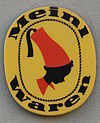
The first logo of the company was designed in 1924 by Joseph Binder, a Viennese graphic designer. The logo depicted a dark-skinned boy with a red fez on his head, as a hint to the origin of the coffee. The design has changed significantly over the years, but the silhouette of a boy has remained its core part. In 2004, Italian designer Matteo Thun has performed a redesign of the logo, making him look upright and using a single colour for the whole logo, effectively eliminating the boy's dark skin colour. [1]
In 2007, an initiative called Mein Julius (English: "My Julius") started using the original version of the logo to protest against racist stereotypes and misinterpretations of Africa and the colonial period. This initiative has not indicated that they used the pre-redesign version of the logo, which led to criticism of the initiative itself. [2] [3]
External links [ edit ]
References [ edit ]
- ^"History of Julius Meinl". Archived from the original on 2015-12-08. The Italian star designer Matteo Thun carries out a relaunch of the logo and develops a new, trendy cup design.
- ^"mein julius".
- ^ Erich Kocina (2007-12-17). "Meinl-Mohr – Symbol des Rassismus?". Die Presse.

 Coffee portal
- Category: Coffee

1. Coffeehouse – A coffeehouse, coffee shop or café is an establishment which primarily serves hot coffee, related coffee beverages, tea and other hot beverages. Some coffeehouses also serve cold beverages such as iced coffee and iced tea, many cafés also serve some type of food, such as light snacks, muffins or pastries. Coffeehouses range from owner-operated small businesses to multinational corporations. A coffeehouse may share some of the characteristics of a bar or restaurant. Many coffee houses in the Middle East and in West Asian immigrant districts in the Western world offer shisha, espresso bars are a type of coffeehouse that specializes in serving espresso and espresso-based drinks. Since the development of Wi-Fi, coffeehouses with this capability have also become places for patrons to access the Internet on their laptops, a coffeehouse can serve as an informal club for its regular members. As early as the 1950s Beatnik era and the 1960s folk music scene, coffeehouses have hosted singer-songwriter performances, coffeehouses in Mecca became a concern as places for political gatherings to the imams, who banned them, as well as the drink, for Muslims between 1512 and 1524. In 1530, the first coffeehouse was opened in Damascus and not long there were many coffeehouses in Cairo. About that year, a fellow called Hakam from Aleppo and a wag called Shams from Damascus came to the city, they opened a large shop in the district called Tahtakale. Various legends involving the introduction of coffee to Istanbul at a Kiva Han in the late 15th century circulate in culinary tradition, resembling checkers, hopscotch, and chess, are played. In addition, mollas, dervishes, and poets take turns telling stories in verse or in prose, the narrations by the mollas and the dervishes are moral lessons, like our sermons, but it is not considered scandalous not to pay attention to them. No one is forced to give up his game or his conversation because of it. It often happens that two or three people talk at the time, one on one side, the other on the opposite, and sometimes one will be a preacher. The most common English spelling, café, is the French, Portuguese and Spanish spelling, thus the spelling cafe has become very common in English-language usage throughout the world, especially for the less formal, i. e. greasy spoon variety. The Italian spelling, caffè, is sometimes used in English. In southern England, especially around London in the 1950s, the French pronunciation was often altered to /ˈkæf/. The English words coffee and café both descend from the Italian word for coffee, caffè—first attested as caveé in Venice in 1570— and in turn derived from the Arabic qahuwa. The Arabic term qahuwa originally referred to a type of wine but after the ban by Mohammed
2. Vienna – Vienna is the capital and largest city of Austria and one of the nine states of Austria. Vienna is Austrias primary city, with a population of about 1.8 million, and its cultural, economic and it is the 7th-largest city by population within city limits in the European Union. Today, it has the second largest number of German speakers after Berlin, Vienna is host to many major international organizations, including the United Nations and OPEC. The city is located in the part of Austria and is close to the borders of the Czech Republic, Slovakia. These regions work together in a European Centrope border region, along with nearby Bratislava, Vienna forms a metropolitan region with 3 million inhabitants. In 2001, the city centre was designated a UNESCO World Heritage Site, apart from being regarded as the City of Music because of its musical legacy, Vienna is also said to be The City of Dreams because it was home to the worlds first psycho-analyst – Sigmund Freud. The citys roots lie in early Celtic and Roman settlements that transformed into a Medieval and Baroque city and it is well known for having played an essential role as a leading European music centre, from the great age of Viennese Classicism through the early part of the 20th century. The historic centre of Vienna is rich in architectural ensembles, including Baroque castles and gardens, Vienna is known for its high quality of life. In a 2005 study of 127 world cities, the Economist Intelligence Unit ranked the city first for the worlds most liveable cities, between 2011 and 2015, Vienna was ranked second, behind Melbourne, Australia. Monocles 2015 Quality of Life Survey ranked Vienna second on a list of the top 25 cities in the world to make a base within, the UN-Habitat has classified Vienna as being the most prosperous city in the world in 2012/2013. Vienna regularly hosts urban planning conferences and is used as a case study by urban planners. Between 2005 and 2010, Vienna was the worlds number-one destination for international congresses and it attracts over 3.7 million tourists a year. The English name Vienna is borrowed from the homonymous Italian version of the name or the French Vienne. The etymology of the name is still subject to scholarly dispute. Some claim that the name comes from Vedunia, meaning forest stream, which produced the Old High German Uuenia. A variant of this Celtic name could be preserved in the Czech and Slovak names of the city, the name of the city in Hungarian, Serbo-Croatian and Ottoman Turkish has a different, probably Slavonic origin, and originally referred to an Avar fort in the area. Slovene-speakers call the city Dunaj, which in other Central European Slavic languages means the Danube River, evidence has been found of continuous habitation since 500 BC, when the site of Vienna on the Danube River was settled by the Celts. In 15 BC, the Romans fortified the city they called Vindobona to guard the empire against Germanic tribes to the north
3. Austria – Austria, officially the Republic of Austria, is a federal republic and a landlocked country of over 8.7 million people in Central Europe. It is bordered by the Czech Republic and Germany to the north, Hungary and Slovakia to the east, Slovenia and Italy to the south, the territory of Austria covers 83,879 km2. The terrain is mountainous, lying within the Alps, only 32% of the country is below 500 m. The majority of the population speaks local Bavarian dialects of German as their native language, other local official languages are Hungarian, Burgenland Croatian, and Slovene. The origins of modern-day Austria date back to the time of the Habsburg dynasty, from the time of the Reformation, many northern German princes, resenting the authority of the Emperor, used Protestantism as a flag of rebellion. Following Napoleons defeat, Prussia emerged as Austrias chief competitor for rule of a greater Germany, Austrias defeat by Prussia at the Battle of Königgrätz, during the Austro-Prussian War of 1866, cleared the way for Prussia to assert control over the rest of Germany. In 1867, the empire was reformed into Austria-Hungary, Austria was thus the first to go to war in the July Crisis, which would ultimately escalate into World War I. The First Austrian Republic was established in 1919, in 1938 Nazi Germany annexed Austria in the Anschluss. This lasted until the end of World War II in 1945, after which Germany was occupied by the Allies, in 1955, the Austrian State Treaty re-established Austria as a sovereign state, ending the occupation. In the same year, the Austrian Parliament created the Declaration of Neutrality which declared that the Second Austrian Republic would become permanently neutral, today, Austria is a parliamentary representative democracy comprising nine federal states. The capital and largest city, with a population exceeding 1.7 million, is Vienna, other major urban areas of Austria include Graz, Linz, Salzburg and Innsbruck. Austria is one of the richest countries in the world, with a nominal per capita GDP of $43,724, the country has developed a high standard of living and in 2014 was ranked 21st in the world for its Human Development Index. Austria has been a member of the United Nations since 1955, joined the European Union in 1995, Austria also signed the Schengen Agreement in 1995, and adopted the euro currency in 1999. The German name for Austria, Österreich, meant eastern realm in Old High German, and is cognate with the word Ostarrîchi and this word is probably a translation of Medieval Latin Marchia orientalis into a local dialect. Austria was a prefecture of Bavaria created in 976, the word Austria is a Latinisation of the German name and was first recorded in the 12th century. Accordingly, Norig would essentially mean the same as Ostarrîchi and Österreich, the Celtic name was eventually Latinised to Noricum after the Romans conquered the area that encloses most of modern-day Austria, around 15 BC. Noricum later became a Roman province in the mid-first century AD, heers hypothesis is not accepted by linguists. Settled in ancient times, the Central European land that is now Austria was occupied in pre-Roman times by various Celtic tribes, the Celtic kingdom of Noricum was later claimed by the Roman Empire and made a province
4. Euro – Outside of Europe, a number of overseas territories of EU members also use the euro as their currency. Additionally,210 million people worldwide as of 2013 use currencies pegged to the euro, the euro is the second largest reserve currency as well as the second most traded currency in the world after the United States dollar. The name euro was adopted on 16 December 1995 in Madrid. The euro was introduced to world markets as an accounting currency on 1 January 1999. While the euro dropped subsequently to US$0.8252 within two years, it has traded above the U. S. dollar since the end of 2002, peaking at US$1.6038 on 18 July 2008. In July 2012, the euro fell below US$1.21 for the first time in two years, following concerns raised over Greek debt and Spains troubled banking sector, as of 26 March 2017, the euro–dollar exchange rate stands at
US$1.07. The euro is managed and administered by the Frankfurt-based European Central Bank, as an independent central bank, the ECB has sole authority to set monetary policy. The Eurosystem participates in the printing, minting and distribution of notes and coins in all states. The 1992 Maastricht Treaty obliges most EU member states to adopt the euro upon meeting certain monetary and budgetary convergence criteria, all nations that have joined the EU since 1993 have pledged to adopt the euro in due course. Since 5 January 2002, the central banks and the ECB have issued euro banknotes on a joint basis. Euro banknotes do not show which central bank issued them, Eurosystem NCBs are required to accept euro banknotes put into circulation by other Eurosystem members and these banknotes are not repatriated. The ECB issues 8% of the value of banknotes issued by the Eurosystem. In practice, the ECBs banknotes are put into circulation by the NCBs and these liabilities carry interest at the main refinancing rate of the ECB. The euro is divided into 100 cents, in Community legislative acts the plural forms of euro and cent are spelled without the s, notwithstanding normal English usage. Otherwise, normal English plurals are used, with many local variations such as centime in France. All circulating coins have a side showing the denomination or value. Due to the plurality in the European Union, the Latin alphabet version of euro is used. For the denominations except the 1-, 2- and 5-cent coins, beginning in 2007 or 2008 the old map is being replaced by a map of Europe also showing countries outside the Union like Norway
5. German language – German is a West Germanic language that is mainly spoken in Central Europe. It is the most widely spoken and official language in Germany, Austria, Switzerland, South Tyrol, the German-speaking Community of Belgium and it is also one of the three official languages of Luxembourg. Major languages which are most similar to German include other members of the West Germanic language branch, such as Afrikaans, Dutch, English, Luxembourgish and it is the second most widely spoken Germanic language, after English. One of the languages of the world, German is the first language of about 95 million people worldwide. The German speaking countries are ranked fifth in terms of publication of new books. German derives most of its vocabulary from the Germanic branch of the Indo-European language family, a portion of German words are derived from Latin and Greek, and fewer are borrowed from French and English. With slightly different standardized variants, German is a pluricentric language, like English, German is also notable for its broad spectrum of dialects, with many unique varieties existing in Europe and also other parts of the world. The history of the German language begins with the High German consonant shift during the migration period, when Martin Luther translated the Bible, he based his translation primarily on the standard bureaucratic language used in Saxony, also known as Meißner Deutsch. Copies of Luthers Bible featured a long list of glosses for each region that translated words which were unknown in the region into the regional dialect. Roman Catholics initially rejected Luthers translation, and tried to create their own Catholic standard of the German language – the difference in relation to Protestant German was minimal. It was not until the middle of the 18th century that a widely accepted standard was created, until about 1800, standard German was mainly a written language, in urban northern Germany, the local Low German dialects were spoken. Standard German, which was different, was often learned as a foreign language with uncertain pronunciation. Northern German pronunciation was considered the standard in prescriptive pronunciation guides though, however, German was the language of commerce and government in the Habsburg Empire, which encompassed a large area of Central and Eastern Europe. Until the mid-19th century, it was essentially the language of townspeople throughout most of the Empire and its use indicated that the speaker was a merchant or someone from an urban area, regardless of nationality. Some cities, such as Prague and Budapest, were gradually Germanized in the years after their incorporation into the Habsburg domain, others, such as Pozsony, were originally settled during the Habsburg period, and were primarily German at that time. Prague, Budapest and Bratislava as well as cities like Zagreb, the most comprehensive guide to the vocabulary of the German language is found within the Deutsches Wörterbuch. This dictionary was created by the Brothers Grimm and is composed of 16 parts which were issued between 1852 and 1860, in 1872, grammatical and orthographic rules first appeared in the Duden Handbook. In 1901, the 2nd Orthographical Conference ended with a standardization of the German language in its written form
6. Retailer – Retail markets and shops have a very ancient history, dating back to antiquity. Retailing involves the process of selling goods or services to customers through multiple channels of distribution to earn a profit. Retailers satisfy demand is identified through a supply chain, Once the strategic retail plan is in place, retailers devise the retail mix which includes product, price, place, promotion, personnel and presentation. In the digital age, a number of retailers are seeking to reach broader markets by selling through multiple channels. Digital technologies are changing the way that consumers pay for goods. Retailing support services may include the provision of credit, delivery services. Shopping generally refers to the act of buying products, sometimes this is done to obtain final goods, including necessities such as food and clothing, sometimes it takes place as a recreational activity. Recreational shopping often involves window shopping and browsing, it not always result in a purchase. Retail shops occur in a range of types and in many different contexts - from strip shopping centres in residential streets through to large. Shopping streets may restrict traffic to pedestrians only, forms of non-shop retailing include online retailing and mail order. Retail comes from the Old French word tailler, which means to cut off, clip, pare and it was first recorded as a noun with the meaning of a sale in small quantities in 1433. Like in French, the retail in both Dutch and German also refers to the sale of small quantities of items. Also see History of merchants, History of the market place, open air, public markets were known in ancient Babylonia and Assyria. These markets typically occupied a place in the towns centre, surrounding the market, skilled artisans, such as metal-workers and leather workers, occupied premises in alley ways that led to the open market-place. These artisans may have sold wares directly from their premises, in ancient Greece markets operated within the agora, and in ancient Rome the forum. In antiquity, exchange involved direct selling, merchants or peddlers, the Phoenicians, noted for their seafaring skills, plied their ships across the Mediterranean, becoming a major trading power by 9th century BCE. The Phoenicians imported and exported wood, textiles, glass and produce such as wine, oil, dried fruit, the Phoenicians extensive trade networks necessitated considerable book-keeping and correspondence. In around 1500 BCE, the Phoenicians developed an alphabet which was much easier to learn that the complex scripts used in ancient Egypt
7. Gourmet – The term and its associated practices are usually used positively to describe people of refined taste and passion. The term gourmet can refer to a person with refined or discriminating taste who is knowledgeable in the craft, gourmand carries additional connotations of one who simply enjoys food in great quantities. An epicure is similar to a gourmet, but the word may sometimes carry overtones of excessive refinement, a gourmet chef is a chef of particularly high caliber of cooking talent and skill. Gourmet may describe a class of restaurant, cuisine, meal or ingredient of high quality, of special presentation, in the United States, a 1980s gourmet food movement evolved from a long-term division between elitist tastes and a populist aversion to fancy foods. Gourmet is a classification for high-quality premium foods in the United States. In the 2000s, there has been an increase in the American gourmet market, due in part to rising income, globalization of taste. Individual food and beverage categories, such as coffee, are divided between a standard and a gourmet sub-market. Certain events such as wine tastings cater to people who consider themselves gourmets, television programs and publications such as Gourmet magazine often serve gourmets with food columns and features. Gourmet tourism is an industry catering to people who travel to food or wine tastings, restaurants, or food. The word gourmet is from the French term for a broker or taste-vin employed by a wine dealer. The pleasure is also visual, Jaime un ragoût, et je suis friand, Giacomo Casanova declared, mais sil na pas bonne mine, in the eighteenth century, gourmet and gourmand carried disreputable connotations of gluttony, which only gourmand has retained. Gourmet was rendered respectable by Monsieur Grimod de la Reynière, whose Almanach des Gourmands, essentially the first restaurant guide, the Jesuits Dictionnaire de Trévoux took the Encyclopédistes to task, reminding its readers that gourmandise was one of the Seven Deadly Sins. Foodie is often used by the media as a synonym for gourmet. The word foodie was coined synchronously by Gael Greene in the magazine New York and by Paul Levy and Ann Barr, co-authors of The Official Foodie Handbook. The term gourmet is often used in the context of the MFA Graphic Design department at the design school, Rhode Island School of Design, in Providence. For these graduate students, the word gourmet now carries a new meaning that brings to mind anything, fooding – a restaurant guide Michelin Guide – a restaurant guide Specialty foods Chisholm, Hugh, ed. Gourmet
8. Grocery – A grocery store is a retail store that primarily sells food. A grocer is a seller of food. Grocery stores often offer non-perishable food that is packaged in cans, bottles and boxes, with also having fresh produce, butchers, delis. Large grocery stores that stock significant amounts of products, such as clothing. Some large supermarkets also include a pharmacy, and customer service, redemption, in the United States, Canada, and United Kingdom, supermarkets and convenience stores are sometimes described as grocery businesses, or simply grocers. Some grocery stores form the centerpiece of a complex that includes other facilities, such as gas stations. This setup is especially common in the United Kingdom, with chains such as Tesco. Some groceries specialize in the foods of a nationality or culture, such as Italian, Polish. These stores are known as ethnic markets and may serve as gathering places for immigrants. In many cases, the range of products carried by larger supermarkets has reduced the need for such speciality stores. The variety and availability of food is no longer restricted by the diversity of locally grown food or the limitations of the growing season. Beginning as early as the 14th century, a grocer was a dealer in dry goods such as spices, peppers, sugar. These items were bought in bulk, hence the term grocer from the French grossier meaning wholesaler, as increasing numbers of staple foodstuffs became available in cans and other less-perishable packaging, the trade expanded its province. Today, grocers deal in a range of staple food-stuffs including such perishables as meats, produce. These trading posts evolved into larger retail businesses known as general stores and these facilities generally dealt only in dry goods such as flour, dry beans, baking soda, and canned foods. Many rural areas still contain general stores that sell goods ranging from cigars to imported napkins, traditionally, general stores have offered credit to their customers, a system of payment that works on trust rather than modern credit cards. This allowed farm families to buy staples until their harvest could be sold, the first self-service grocery store, Piggly Wiggly, was opened in 1916 in Memphis, Tennessee by Clarence Saunders, an inventor and entrepreneur. The early supermarkets began as chains of grocers shops, a small grocery store may also compete by locating in a mixed commercial-residential area close to, and convenient for, its customers
9. Vienna Stock Exchange – The Wiener Börse AG is the only stock exchange in Vienna, Austria, and one of the most established exchanges in Eastern and Southeastern Europe. It features an infrastructure and supplies market data and relevant information. It offers Austrian companies maximum visibility, high liquidity and utmost transparency, investors can rely on the smooth and efficient execution of exchange trades. The Vienna Stock Exchange operates a central market datafeed for Central, Wiener Börse AG, together with its holding company, CEESEG, cooperates with over ten exchanges in CEE and is globally recognized for this unique know-how. Wiener Börse is one of the worlds oldest exchanges and was founded in 1771 during the reign of Empress Maria Theresa of Austria in order to provide a market for state issued bonds, the Panic of 1873 and Long Depression followed. Today, the Vienna Stock Exchange operates the only securities exchange in Austria and it provides trading infrastructure, market data and information to ensure the execution of stock exchange transactions and facilitate the interaction among all market participants. The core business of the exchange is the operation of a market as well as a market for trading in structured products. Additional services include data vending, index development and management and specialized financial market seminars, the Austrian Traded Index, the leading index of Wiener Börse, tracks the price trends of the blue chips on Wiener Börse in real time. The composition of the ATX is reviewed every year in March, the main criteria for inclusion or deletion are the capitalized free float and stock exchange trading volumes. The Vienna Stock Exchange is a 100% subsidiary of the holding CEESEG AG, list of European stock exchanges Information of Vienna Stock Exchange Webpage of CEE Stock Exchange Group Wiener Börse AG
10. Chicago, Illinois – Chicago, officially the City of Chicago, is the third-most populous city in the United States. With over 2.7 million residents, it is the most populous city in the state of Illinois, and it is the county seat of Cook County. In 2012, Chicago was listed as a global city by the Globalization and World Cities Research Network. Chicago has the third-largest gross metropolitan product in the United States—about $640 billion according to 2015 estimates, the city has one of the worlds largest and most diversified economies with no single industry employing more than 14% of the workforce. In 2016, Chicago hosted over 54 million domestic and international visitors, landmarks in the city include Millennium Park, Navy Pier, the Magnificent Mile, Art Institute of Chicago, Museum Campus, the Willis Tower, Museum of Science and Industry, and Lincoln Park Zoo. Chicagos culture includes the arts, novels, film, theater, especially improvisational comedy. Chicago also has sports teams in each of the major professional leagues. The city has many nicknames, the best-known being the Windy City, the name Chicago is derived from a French rendering of the Native American word shikaakwa, known to botanists as Allium tricoccum, from the Miami-Illinois language. The first known reference to the site of the current city of Chicago as Checagou was by Robert de LaSalle around 1679 in a memoir, henri Joutel, in his journal of 1688, noted that the wild garlic, called chicagoua, grew abundantly in the area. In the mid-18th century, the area was inhabited by a Native American tribe known as the Potawatomi, the first known non-indigenous permanent settler in Chicago was Jean Baptiste Point du Sable. Du Sable was of African and French descent and arrived in the 1780s and he is commonly known as the Founder of Chicago. In 1803, the United States Army built Fort Dearborn, which was destroyed in 1812 in the Battle of Fort Dearborn, the Ottawa, Ojibwe, and Potawatomi tribes had ceded additional land to the United States in the 1816 Treaty of St. Louis. The Potawatomi were forcibly removed from their land after the Treaty of Chicago in 1833, on August 12,1833, the Town of Chicago was organized with a population of about 200. Within seven years it grew to more than 4,000 people, on June 15,1835, the first public land sales began with Edmund Dick Taylor as U. S. The City of Chicago was incorporated on Saturday, March 4,1837, as the site of the Chicago Portage, the city became an important transportation hub between the eastern and western United States. Chicagos first railway, Galena and Chicago Union Railroad, and the Illinois, the canal allowed steamboats and sailing ships on the Great Lakes to connect to the Mississippi River. A flourishing economy brought residents from rural communities and immigrants from abroad, manufacturing and retail and finance sectors became dominant, influencing the American economy. The Chicago Board of Trade listed the first ever standardized exchange traded forward contracts and these issues also helped propel another Illinoisan, Abraham Lincoln, to the national stage
11. Illinois – Illinois is a state in the midwestern region of the United States, achieving statehood in 1818. It is the 6th most populous state and 25th largest state in terms of land area, the word Illinois comes from a French rendering of a native Algonquin word. For decades, OHare International Airport has been ranked as one of the worlds busiest airports, Illinois has long had a reputation as a bellwether both in social and cultural terms and politics. With the War of 1812 Illinois growth slowed as both Native Americans and Canadian forces often raided the American Frontier, mineral finds and timber stands also had spurred immigration—by the 1810s, the Eastern U. S. Railroads arose and matured in the 1840s, and soon carried immigrants to new homes in Illinois, as well as being a resource to ship their commodity crops out to markets. Railroads freed most of the land of Illinois and other states from the tyranny of water transport. By 1900, the growth of jobs in the northern cities and coal mining in the central and southern areas attracted a new group of immigrants. Illinois was an important manufacturing center during both world wars, the Great Migration from the South established a large community of African Americans in Chicago, who created the citys famous jazz and blues cultures. Three U. S. presidents have been elected while living in Illinois, Abraham Lincoln, Ulysses S. Grant, additionally, Ronald Reagan, whose political career was based in California, was the only U. S. president born and raised in Illinois. Today, Illinois honors Lincoln with its official slogan, Land of Lincoln. The Abraham Lincoln Presidential Library and Museum is located in the capital of Springfield. Illinois is the spelling for the early French Catholic missionaries and explorers name for the Illinois Native Americans. American scholars previously thought the name Illinois meant man or men in the Miami-Illinois language and this etymology is not supported by the Illinois language, as the word for man is ireniwa and plural men is ireniwaki. The name Illiniwek has also said to mean tribe of superior men. The name Illinois derives from the Miami-Illinois verb irenwe·wa he speaks the regular way and this was taken into the Ojibwe language, perhaps in the Ottawa dialect, and modified into ilinwe·. The French borrowed these forms, changing the ending to spell it as -ois. The current spelling form, Illinois, began to appear in the early 1670s, the Illinois name for themselves, as attested in all three of the French missionary-period dictionaries of Illinois, was Inoka, of unknown meaning and unrelated to the other terms. American Indians of successive cultures lived along the waterways of the Illinois area for thousands of years before the arrival of Europeans, the Koster Site has been excavated and demonstrates 7,000 years of continuous habitation
12. Cincinnati, Ohio – Cincinnati is a city in the U. S. state of Ohio that serves as county seat of Hamilton County. Settled in 1788, the city is located on the side of the confluence of the Licking with the Ohio River. With a population of 298,550, Cincinnati is the third-largest city in Ohio and its metropolitan statistical area is the 28th-largest in the United States and the largest centered in Ohio. The city is part of the larger Cincinnati–Middletown–Wilmington combined statistical area. In the 19th century, Cincinnati was an American boomtown in the heart of the country, it rivaled the larger cities in size. Throughout much of the 19th century, it was listed among the top 10 U. S and it was by far the largest city in the west. By the end of the 19th century, with the shift from steamboats to railroads drawing off freight shipping, trade patterns had altered and Cincinnatis growth slowed considerably. Cincinnati is home to two sports teams, the Cincinnati Reds, the oldest franchise in Major League Baseball. The University of Cincinnati, founded in 1819, is one of the 50 largest in the United States, Cincinnati is known for its historic architecture. In the late 1800s, Cincinnati was commonly referred to as Paris of America, due mainly to such ambitious projects as the Music Hall, Cincinnatian Hotel. The original surveyor, John Filson, named it Losantiville, in 1790, Arthur St. Ethnic Germans were among the early settlers, migrating from Pennsylvania and the backcountry of Virginia and Tennessee. General David Ziegler succeeded General St. Clair in command at Fort Washington, after the conclusion of the Northwest Indian Wars and removal of Native Americans to the west, he was elected as the mayor of Cincinnati in 1802. Cincinnati was incorporated as a city in 1819, exporting pork products and hay, it became a center of pork processing in the region. From 1810 to 1830 its population tripled, from 9,642 to 24,831. Completion of the Miami and Erie Canal in 1827 to Middletown, Ohio further stimulated businesses, the city had a labor shortage until large waves of immigration by Irish and Germans in the late 1840s. The city grew rapidly over the two decades, reaching 115,000 persons by 1850. Construction on the Miami and Erie Canal began on July 21,1825, the first section of the canal was opened for business in 1827. In 1827, the canal connected Cincinnati to nearby Middletown, by 1840, during this period of rapid expansion and prominence, residents of Cincinnati began referring to the city as the Queen City
13. Ohio – Ohio /oʊˈhaɪ. oʊ/ is a Midwestern state in the Great Lakes region of the United States. Ohio is the 34th largest by area, the 7th most populous, the states capital and largest city is Columbus. The state takes its name from the Ohio River, the name originated from the Iroquois word ohi-yo’, meaning great river or large creek. Partitioned from the Northwest Territory, the state was admitted to the Union as the 17th state on March 1,1803, Ohio is historically known as the Buckeye State after its Ohio buckeye trees, and Ohioans are also known as Buckeyes. Ohio occupies 16 seats in the United States House of Representatives, Ohio is known for its status as both a swing state and a bellwether in national elections. Six Presidents of the United States have been elected who had Ohio as their home state, Ohios geographic location has proven to be an asset for economic growth and expansion. Because Ohio links the Northeast to the Midwest, much cargo, Ohio has the nations 10th largest highway network, and is within a one-day drive of 50% of North Americas population and 70% of North Americas manufacturing capacity. To the north, Lake Erie gives Ohio 312 miles of coastline, Ohios southern border is defined by the Ohio River, and much of the northern border is defined by Lake Erie. Ohios neighbors are Pennsylvania to the east, Michigan to the northwest, Ontario Canada, to the north, Indiana to the west, Kentucky on the south, Ohio is bounded by the Ohio River, but nearly all of the river itself belongs to Kentucky and West Virginia. Ohio has only that portion of the river between the rivers 1792 low-water mark and the present high-water mark, the border with Michigan has also changed, as a result of the Toledo War, to angle slightly northeast to the north shore of the mouth of the Maumee River. Much of Ohio features glaciated plains, with a flat area in the northwest being known as the Great Black Swamp. Most of Ohio is of low relief, but the unglaciated Allegheny Plateau features rugged hills, in 1965 the United States Congress passed the Appalachian Regional Development Act, at attempt to address the persistent poverty and growing economic despair of the Appalachian Region. This act defines 29 Ohio counties as part of Appalachia, the worst weather disaster in Ohio history occurred along the Great Miami River in 1913. Known as the Great Dayton Flood, the entire Miami River watershed flooded, as a result, the Miami Conservancy District was created as the first major flood plain engineering project in Ohio and the United States. Grand Lake St. Marys in the west central part of the state was constructed as a supply of water for canals in the era of 1820–1850. For many years this body of water, over 20 square miles, was the largest artificial lake in the world and it should be noted that Ohios canal-building projects were not the economic fiasco that similar efforts were in other states. Some cities, such as Dayton, owe their emergence to location on canals. Summers are typically hot and humid throughout the state, while winters generally range from cool to cold, precipitation in Ohio is moderate year-round
14. Matteo Thun – Matteo Thun, born in 1952 in Bolzano, Italy, is an architect and designer. Thun studied at the Salzburg Academy under the supervision of Oskar Kokoschka and he then obtained a degree in architecture in Florence, Italy, in 1975. In 1978 he moved to Milan, starting to work with Ettore Sottsass, in 1981, he was one of the co-founders of the Memphis Group, a design movement that helped shape form and style throughout the 1980s. The following year, he was appointed the chair in product design, in 1984, he founded his Studio, in Milan, Italy. Between 1990 and 1993, he worked as the Creative Director at Swatch, in 2001, the Side Hotel he designed in Hamburg was selected as Hotel of the Year. In 2004, the Vigilius Mountain Resort won the Wallpaper Design Award while in 2005 the Radisson SAS in Frankfurt became the best hotel opened in the year in the Worldwide Hospitality Awards. In 2004, December, Matteo Thun was chosen for the Interior Hall of Fame in New York and he has also become a member of the Royal Association of British Architects. Thuns Official site The ADI Compasso dOro site Ettore Sottsass site
15. Economics of coffee – Coffee is a popular beverage and an important commodity. Tens of millions of small producers in developing countries make their living growing coffee, over 2.25 billion cups of coffee are consumed in the world every day. Over 90% of coffee production takes place in developing countries - mostly South America and this last fact is frequently misstated, see coffee commodity market. The worlds largest transfer point for coffee is the port of Hamburg, in 2009 Brazil was the world leader in production of green coffee, followed by Vietnam, Indonesia, Colombia and Ethiopia. Arabica coffee beans are cultivated in Latin America, eastern Africa, Arabia, Robusta coffee beans are grown in western and central Africa, throughout southeast Asia, and to some extent in Brazil. Beans from different countries or regions can usually be distinguished by differences in flavor, aroma, body and these taste characteristics are dependent not only on the coffees growing region, but also on genetic subspecies and processing. Varietals are generally known by the region in which they are grown, such as Colombian, Java, Coffee in India In 16th century, a holy sufi saint Baba Budan reportedly smuggled “seven coffee seeds”from Arabia and planted in the courtyard of his hermitage in Chikmagalure of Karnataka. From there coffee, spread over to parts and presently 16 varieties of coffee is grown in India. Coffee was first introduced in Andhra Pradesh in 1898 by Mr. Brodi, subsequently it spread over to Pullangi and Gudem agency tracks. In 1920s even though it spread over to Ananthagiri in Araku valley and Chintapalli areas, in 1960s, the Andhra Pradesh Forest Department developed coffee plantations in 10100 acres in Reserve forest areas. These plantations were handed over to the A. P. Forest Development Corporation in the year 1985, in the year 1956 after the formation of Girijan Cooperative Corporation, the Coffee Board identified GCC for promoting coffee plantations. Since then, GCC started making efforts to develop coffee plantation through local tribal famers, a separate coffee wing was carved out in GCC and promoting coffee in around 4000 hectares taken up. Thus, the coffee grown in Araku valley by the farmers under organic practices attained recognition as “Araku coffee”. After 1985, GCC promoted another organization by name “Girijan Coop, plantation Development Corporation” exclusively to develop coffee plantations in tribal areas. All the plantations developed by GCC and GCPDC were handed over to the tribal farmers @2 acres to each family, in July,1997, the employees working in GCPDC were deployed to ITDA and coffee expansion was taken up under Five year Plan and MGNREGS. Thus presently the coffee cultivation reached 1 lakh acres and maintained by the tribal farmers, in India, while coffee plantations were well developed over the last century in Western ghats, expansion of coffee in Eastern ghats is still to develop. Coffee is grown under organic practices under shades of Mango, Jackfruit, Banana and it also helps in environmental conservation and ecological balances. Around 1 lakh tribal families living in this region are getting financially stabilized through coffee cultivation, the more welcoming development is that the tribal famers have given up their traditional “Podu” cultivation and now switched over to coffee cultivation on a large scale
16. Fair trade coffee – Fair trade coffee is coffee that is certified as having been produced to fair trade standards. Fair trade organizations create trading partnerships that are based on dialogue, transparency and respect and these partnerships contribute to sustainable development by offering better trading conditions to coffee bean farmers. Fair trade organizations are engaged actively in supporting producers and sustainable farming practices. Fair trade practices prohibit child or forced labor, prior to fair trade, prices were regulated by the International Coffee Organization according to the regulations set forth by the International Coffee Agreement of 1962. The ICA existed for five years, and then was renewed in 1968, the agreement was renegotiated in 1976 due to increasing coffee prices, largely a result of a severe frost in Brazil. The new agreement allowed for the suspension of price quotas if the supply of coffee could not meet the demand, in 1983, the agreement was again redrawn, this time creating a database on coffee trade, and implementing stricter import and export regulations. Launched in the Netherlands, fair trade certification aimed to raise coffee prices in order to ensure growers sufficient wages to turn a profit. The original name of the organization was Max Havelaar, after a fictional Dutch character who opposed the exploitation of farmers by Dutch colonialists in the East Indies. The organization created a label for products that met certain wage standards, quotas remained a part of the agreement until 1989, when the organization was unable to negotiate a new agreement in time for the next year. It was decided that the 1983 agreement would be extended, a new agreement could not be negotiated until 1992. From 1990 to 1992, without the quotas in place, coffee prices reached a low because coffee price quotas could not be decided. In 1997, these four organizations jointly created Fairtrade International, which continues to set Fairtrade standards, the standards developed by Fairtrade Labelling Organization are the most widely used. The certification scheme is run by Fairtrade International, Coffee packers pay Fairtrade a fee for the right to use the Fairtrade logo, which gives consumers an assurance that the coffee meets Fairtrade criteria. The coffee with this certification mark must be produced by farmers, Coffee retailers are not restricted by Fairtrade to sell Fairtrade coffee as a premium product and charge as much as they like for the coffee. Importers of Fairtrade coffee have to be registered with Fairtrade and pay a fee, under the Fairtrade International standards they are obliged to pay a minimum price to the exporting organization, currently $1. 40c/lb New York Board of Trade “C” contract, F. O. B. Origin for Arabica, and $1.05 for Robusta London “EURONEXT LIFFE” contract, when the world price is above this level, they are obliged to pay 20c/lb above the world price. Certified Fairtrade coffee is exported by secondary or tertiary cooperatives. There is not enough demand to all the certified coffee produced
17. History of coffee – The history of coffee goes at least as far back as the 10th century, with a number of reports and legends surrounding its first use. The native origin of coffee is thought to have been Ethiopia, the earliest substantiated evidence of either coffee drinking or knowledge of the coffee tree is from the 15th century, in the Sufi monasteries of Yemen. By the 16th century, it had reached the rest of the Middle East, South India, Persia, Turkey, Horn of Africa, Coffee then spread to the Balkans, Italy and to the rest of Europe, to South East Asia and then to America. The word coffee entered the English language in 1582 via the Dutch koffie, borrowed from the Turkish kahve, in turn borrowed from the Arabic qahwah. The word qahwah originally referred to a type of wine, whose etymology is given by Arab lexicographers as deriving from the verb qahā in reference to the reputation as an appetite suppressant. The word qahwah is sometimes traced to the Arabic quwwa, or to Kaffa. These etymologies for qahwah have all been disputed, however, the name qahwah is not used for the berry or plant, which are known in Arabic as bunn and in Oromo as būn. Semitic had a root qhh dark color, which became a natural designation for the beverage, according to this analysis, the feminine form qahwah was likely chosen to parallel the feminine khamr, and originally meant the dark one. The Ethiopian ancestors of todays Oromo ethnic group were the first to have recognized the effect of the native coffee plant. The original domesticated coffee plant is said to have been from Harar, Coffee was primarily consumed in the Islamic world where it originated and was directly related to religious practices. There are several accounts of the origin of the drink itself. One account involves the Yemenite Sufi mystic Ghothul Akbar Nooruddin Abu al-Hasan al-Shadhili, when traveling in Ethiopia, the legend goes, he observed birds of unusual vitality, and, upon trying the berries that the birds had been eating, experienced the same vitality. Other accounts attribute the discovery of coffee to Sheik Aboul Hasan Schadhelis disciple, according to the ancient chronicle, Omar, who was known for his ability to cure the sick through prayer, was once exiled from Mocha to a desert cave near Ousab. Starving, Omar chewed berries from nearby shrubbery, but found them to be bitter and he tried roasting the beans to improve the flavor, but they became hard. He then tried boiling them to soften the bean, which resulted in a fragrant brown liquid, upon drinking the liquid Omar was revitalized and sustained for days. As stories of this miracle drug reached Mocha, Omar was asked to return and was made a saint and his exhilaration prompted him to bring the berries to a monk in a nearby monastery. But the monk disapproved of their use and threw them into the fire, from which an enticing aroma billowed, causing other monks to come and investigate. The roasted beans were quickly raked from the embers, ground up, since this story is not known to have appeared in writing before 1671,800 years after it was supposed to have taken place, it is highly likely to be apocryphal
18. Coffee production – Coffee production is the industrial process of converting the raw fruit of the coffee plant into the finished coffee. However, it is not what one would call a processed product, the cherry has the fruit or pulp removed leaving the seed or bean which is then dried. While all green coffee is processed, the method that is used varies, coffee production is a major source of income, especially for developing countries where coffee is grown. By adding value, processing the coffee locally, coffee farmers, the cherries ripen around eight months after the emergence of the flower, by changing color from green to red, and it is at this time that they should be harvested. Whether picked by hand or by machine, all coffee is harvested in one of two ways, Strip picked All coffee fruit is removed from the tree, regardless of maturation state and this can either be done by machine or by hand. In the first method, pickers generally place a canvas on the ground and they then grab the branch next to the trunk with their hands and pull outward, knocking all of the fruit onto the ground. After doing this with all branches and trees for the length of the canvas and this process can be facilitated through the use of mechanical strippers. Selectively picked Only the ripe cherries are harvested and they are picked individually by hand, pickers rotate among the trees every eight to ten days, choosing only the cherries, which are at the peak of ripeness. It usually takes two to four years after planting for a plant to produce coffee beans that are ripe enough to harvest. The plant eventually grows small white blossoms that drop and are replaced by green berries and these green berries will become a deep red color as they ripen. It takes about 9 months for the cherries to reach their deepest red color. Because this kind of harvest is labor-intensive, and thus more costly, the laborers who pick coffee by hand receive payment by the basketful. As of 2003, payment per basket is between US$2.00 to $10 with the majority of the laborers receiving payment at the lower end. An experienced coffee picker can collect up to six or seven baskets a day, depending on the grower, coffee pickers are sometimes specifically instructed to not pick green coffee berries since the seeds in the berries are not fully formed or mature. This discernment typically only occurs with growers who harvest for higher end/specialty coffee where the pickers are paid better for their labor, lots comprising unripe coffee fruit are often used to produce cheaper mass consumer coffee beans, which are characterized by a displeasingly bitter/astringent flavor and a sharp odor. Red berries, with their higher aromatic oil and lower organic acid content, are fragrant, smooth. As such, coffee picking is one of the most important stages in coffee production, in the wet process, the fruit covering the seeds/beans is removed before they are dried. Coffee processed by the wet method is called wet processed or washed coffee, the wet method requires the use of specific equipment and substantial quantities of water
19. Coffea – Coffea is a genus of flowering plants whose seeds, called coffee beans, are used to make various coffee beverages and products. It is a member of the family Rubiaceae and they are shrubs or small trees native to tropical and southern Africa and tropical Asia. Several species of Coffea may be grown for the seeds, Coffea arabica accounts for 75-80 percent of the worlds coffee production, while Coffea canephora accounts for about 20 percent. The trees produce edible red or purple fruits called cherries that are described either as epigynous berries or as indehiscent drupes, the cherries contain two seeds, the so-called coffee beans, which—despite their name—are not true beans. In about 5-10% of any crop of coffee cherries, only a single bean and this is called a peaberry, which is smaller and rounder than a normal coffee bean. It is often removed from the yield and either sold separately, when grown in the tropics, coffee is a vigorous bush or small tree that usually grows to a height of 3–3.5 m. Most commonly cultivated coffee species grow best at high elevations, the tree of Coffea arabica will grow fruits after three to five years, and will produce for about 50 to 60 years. The white flowers are highly scented, the fruit takes about 9 months to ripen. The caffeine in coffee beans is a plant defense against herbivory. Fruits and leaves are sources of caffeine as well and a tea can be made of the leaves. Several insect pests affect coffee production, including the coffee borer beetle, Coffee is used as a food plant by the larvae of some Lepidoptera species, Dalcera abrasa, turnip moth and some members of the genus Endoclita, including E. damor and E. malabaricus. In 2008, two new species of plants were discovered in Cameroon, Coffea charrieriana, which is caffeine-free. By crossing the new species with other known coffees, two new features might be introduced to cultivated plants, beans without caffeine and self-pollination. In 2014, the genome was published, with more than 25,000 genes identified. This revealed that coffee plants make caffeine using a different set of genes from those found in tea, cacao, world Checklist of Rubiaceae Coffee & Conservation
20. List of coffee varieties – Coffee varieties are the diverse subspecies derived through selective breeding or natural selection of coffee plants. These unique traits are what producers use to select breeds when developing crops, therefore, at a micro level, breed selection is critical to the success of a producer and is one of the key components of cup quality. At a macro level, the viability of the industry as a whole is dependent upon breed selection. Already, the majority of coffee produced originates from producers using selected breeds, for this reason, breed selection is an important aspect of sustainability within coffee production. There is considerable confusion as to which term to use when speaking about coffee subspecies, most of the varieties we know in specialty coffee are really cultivars. Bourbon and Typica are some of the most widely known cultivars, put simply, In this article, varieties are naturally occurring subspecies and cultivars are cultivated subspecies. In addition, a term, breed will be used as an umbrella term to simplify discussions in which the nuances between the terms variety and cultivar have no bearing. Unfortunately, robusta also produces lower quality coffee and this knowledge of robusta is critical for modern coffee breeding because robusta is the main source of pest and disease traits not found in arabica. Prior to the mid-1900s, arabica coffee breeding involved simple line selection with an emphasis mostly on favorable adaptation to growing conditions, fruit yield. But in the late 1970s and 1980s, various countries started breeding programs designed to create cultivars resistant to CLR, the intensity of these later breeding programs was a direct response to the serious threat CLR posed to crops. The results of these and other breeding programs have produced a number of important cultivars worth mentioning, farmers have designed standards for crops they would cultivate. Recent advances in breeding techniques have provided farmers with higher-yielding breeds with better disease resistance, below are some additional traits a producer may use to select breeds for crop development. Yield is the measure of the amount of produced by a given breed. It is usually expressed as kilograms or tonnes per hectare per year, high yield is one of the prime objectives of producers and breeding specifically to achieve higher yield is a relatively new trend. Resistance to diseases has become a dominant factor in not only breed selection, breeding for disease resistance has been mainly restricted to CLR and coffee berry disease but also includes other diseases of local importance. Resistance to Pests is not normally a trait developed by breeding but is rather a trait selected from among breeds, certain breeds of coffee have been found to be resistant to nematodes and leaf miner. As with diseases, robusta has been found to be the more resistant species compared to arabica, according to The International Trade Centre, Arabica coffee accounted for roughly 61 per cent of the worlds coffee production between 2004 -2010. It would be higher if Arabica were not as susceptible to disease as it is, coffee from the species C. arabica has many different varieties, each with unique characteristics
21. Coffea arabica – Coffea arabica /əˈræbɪkə/ is a species of Coffea originally indigenous to the forests of the southwestern highlands of Ethiopia. It is also known as the coffee shrub of Arabia, mountain coffee, C. arabica is believed to be the first species of coffee to be cultivated, and is by far the dominant cultivar, representing some 70% of global production. Coffee produced from the acidic, more bitter, and more highly caffeinated robusta bean makes up the preponderance of the balance. Wild plants grow between 9 and 12 m tall, and have a branching system, the leaves are opposite, simple elliptic-ovate to oblong, 6–12 cm long and 4–8 cm broad. The flowers are white, 10–15 mm in diameter and grow in axillary clusters, the seeds are contained in a drupe 10–15 mm in diameter, maturing bright red to purple and typically contains two seeds. Endemic to the regions of Yemen and the southwestern highlands of Ethiopia, C. arabica is now rare in Ethiopia, while many populations appear to be of mixed native. In Ethiopia, where it is called būna, it is used as an understorey shrub. It has also recovered from the Boma Plateau in South Sudan. C. arabica is also found on Mount Marsabit in northern Kenya, the species is widely naturalised in areas outside its native land, in many parts of Africa, Latin America, Southeast Asia, China, and assorted islands in the Caribbean and in the Pacific. The conservation of the variation of C. arabica relies on conserving healthy populations of wild coffee in the Afromontane rainforests of Ethiopia. Genetic research has shown coffee cultivation is threatening the integrity of wild coffee because it exposes wild genotypes to cultivars. Arabica coffees first domestication in Ethiopia is obscure, but cultivation in Yemen is well documented by the 12th century, Coffea arabica accounts for 70% of the worlds coffee production. C. arabica takes about seven years to mature fully, and does best with 1. 0–1.5 meters of rain, evenly distributed throughout the year. It is usually cultivated between 1,300 and 1,500 m altitude, but plantations grow it as low as sea level, the plant can tolerate low temperatures, but not frost, and does best with an average temperature between 15 and 24 °C. Commercial cultivars mostly only grow to about 5 m, and are frequently trimmed as low as 2 m to facilitate harvesting, unlike Coffea canephora, C. arabica prefers to be grown in light shade. Two to four years after planting, C. arabica produces small, white, the sweet fragrance resembles the sweet smell of jasmine flowers. Flowers opening on sunny days result in the greatest numbers of berries, on well-kept plantations, overflowering is prevented by pruning the tree. The flowers only last a few days, leaving only the thick
22. Kona coffee – Kona coffee is the market name for coffee cultivated on the slopes of Hualalai and Mauna Loa in the North and South Kona Districts of the Big Island of Hawaii. It is one of the most expensive coffees in the world, only coffee from the Kona Districts can be described as Kona. The weather of sunny mornings, cloud or rain in the afternoon, little wind, the loanword for coffee in the Hawaiian language is kope, pronounced. The coffee plant was brought to the Kona district in 1828 by Samuel Reverend Ruggles from Brazilian cuttings, english merchant Henry Nicholas Greenwell moved to the area and established Kona coffee as a recognized brand later in the 19th century. The former Greenwell Store and Kona Coffee Living History Farm have since become museums, in other parts of the Hawaiian islands, it was grown on large plantations, but the 1899 world coffee market crash caused plantation owners to lease land to their workers. Most were from Japan, brought to work on sugarcane plantations and they worked their leased parcels of between 5 and 12 acres as family concerns, producing large, quality crops. The tradition of family farms continued throughout Kona, the Japanese-origin families have been joined by Filipinos, mainland Americans, and Europeans. There are approximately 800 Kona coffee farms, with a size of less than 5 acres. In 1997 the total Kona coffee area was 2,290 acres, Kona coffee blooms in February and March. Small white flowers known as Kona snow cover the tree, by late August, red fruit, called cherry because of resemblance to a cherry, start to ripen for picking. Each tree, hand-picked several times between August and January, provides around 15 pounds of cherry, which result in two pounds of roasted coffee. Within 24 hours of picking, the cherry is run through a pulper, the beans are separated from the pulp and then placed overnight in a fermentation tank. The fermentation time is about 12 hours at low elevation or 24 at higher elevation, the beans are rinsed and spread to dry on a hoshidana or drying rack. Traditional hoshidanas have a roof to cover the beans in rain. It takes seven to 14 days to dry beans to a moisture level of between 10 and 13%. Too much moisture content in coffee allows the growth of ochratoxin A, from here, the beans are stored as pergamino or parchment. The parchment is milled off the green bean prior to roasting or wholesale, Kona coffee beans are classified by law according to seed. Type I beans consist of two beans per cherry, flat on one side, oval on the other, type II beans consist of one round bean per cherry, otherwise known as peaberries
23. S795 coffee – S795 is strain of coffee cultivar important for being one of the first strains of C. arabica found to be resistant to coffee leaf rust. Both S288 and Kent are known to be resistant to many rust races, the resultant S795 cultivar exhibits rust resistance, high yield, and a good cup profile, making it a highly desirable cultivar. S795 is widely planted in India and Indonesia, in India, it represents 25-30% of the acreage of arabica coffee. S795 is a tall and vigorous shrub producing a number of primary and secondary plagiotropic branches. The fruit are medium in size and oblong in shape and progress from green when young to dark red when ripe, each node produces around 14 -16 cherries. New leaves are a bronze color List of coffee varieties
24. Coffea liberica – Coffea liberica is a species of flowering plant in the Rubiaceae family. It is a coffee that is native to western and central Africa from Liberia to Uganda and it is also naturalized in the Seychelles, the Andaman & Nicobar Islands, French Polynesia, Central America, the West Indies, Venezuela, Colombia and Brazil. The Coffea liberica tree grows up to 20 metres in height and this coffee was brought to Indonesia to replace the arabica trees killed by the coffee rust disease at the end of the 19th century. It is still found in parts of Central and East Java today, liberica is a major crop in the Philippines. Today, the provinces of Batangas and Cavite in the Philippines are producers of a variety of known as Baraco. Coffea dewevrei, Coffea dybowskii and Coffea excelsa were formerly considered as separate species but were reclassified in 2006 as synonyms for Coffea liberica var. dewevrei, coffee portal World Checklist of Rubiaceae Coffea liberica, United Nations Food and Agriculture Organization website
25. Robusta coffee – Robusta coffee is coffee made from the Coffea canephora plant, a sturdy species of coffee bean with low acidity and high bitterness. C. canephora beans are used primarily in instant coffee, espresso, Robusta has its origins in central and western sub-Saharan Africa. It is easy to care for, has a crop yield, has almost double the amount of caffeine and more antioxidants. It represents approximately 30% of global production, with arabica constituting the balance. Roasted robusta beans produce a strong, full-bodied coffee with a distinctive, earthy flavour, about 30% of the coffee produced in the world is robusta. It is mostly grown in Vietnam, where French colonists introduced it in the late 19th century, though it is grown in India, Africa and Brazil. In recent years, Vietnam, which produces mostly robusta, has become the worlds largest exporter of robusta coffee and it surpasses Brazil, Indonesia, India, and Uganda. Brazil is still the biggest coffee producer in the world, producing one-third of the worlds coffee, Robusta is easier to care for and has a greater crop yield than C. arabica, so is cheaper to produce. Roasted robusta beans produce a strong, full-bodied coffee with a distinctive, earthy flavour, good-quality robusta beans are used in traditional Italian espresso blends, at about 10-15%, to provide a full-bodied taste and a better foam head. Robusta is also used as a stimulant, diuretic, antioxidant, and antipyretic, Robusta is a species of flowering plant in the family Rubiaceae. Though widely known by the synonym Coffea robusta, the plant is scientifically identified as Coffea canephora. The plant has a root system and grows as a robust tree or shrub to about 10 m tall. It flowers irregularly, taking about 10–11 months for cherries to ripen, the robusta plant has a greater crop yield than that of arabica, contains more caffeine, and contains less sugar. As it is susceptible to pests and disease, robusta needs much less herbicide and pesticide than arabica. Originating in upland forests in Ethiopia, robusta grows indigenously in Western and Central Africa from Liberia to Tanzania and it was not recognized as a species of Coffea until 1897, over 100 years after Coffea arabica. It is also naturalized in Borneo, French Polynesia, Costa Rica, Nicaragua, Jamaica. Coffea canephora Coffea arabica Coffea charrieriana Robusta Coffee in Vietnam The Difference Between Arabica, Jan 2008 ICO break down of all Coffee exports Jan 2008 ICO break down of Green Coffee exports
26. Cafestol – Cafestol is a diterpene molecule present in coffee. A typical bean of Coffea arabica contains about 0. 4-0. 7% cafestol by weight, cafestol is present in highest quantity in unfiltered coffee drinks such as French press coffee or Turkish coffee/Greek coffee. In filtered coffee drinks such as drip brewed coffee, it is present in negligible amounts. Studies have shown that consumption of boiled coffee increases serum cholesterol by 8% in men. For those drinking filter coffee, the effect was significant for women. Cafestol has also shown anticarcinogenic properties in rats, cafestol may act as an agonist ligand for the nuclear receptor farnesoid X receptor and pregnane X receptor, blocking cholesterol homeostasis. Cafestol also has effects in a Drosophila fruit fly model of Parkinsons disease
27. Caffeic acid – Caffeic acid is an organic compound that is classified as a hydroxycinnamic acid. This yellow solid consists of both phenolic and acrylic functional groups and it is found in all plants because it is a key intermediate in the biosynthesis of lignin, one of the principal components of plant biomass and its residues. Caffeic acid can be found in the bark of Eucalyptus globulus and it can also be found in the freshwater fern Salvinia molesta or in the mushroom Phellinus linteus. Caffeic acid is found at a very modest level in coffee and it is one of the main natural phenols in argan oil. It is at a high level in black chokeberry and in fairly high level in lingonberry. It is also high in the South American herb yerba mate. It is also found in grain, and in rye grain. Caffeic acid, which is unrelated to caffeine, is biosynthesized by hydroxylation of coumaroyl ester of quinic acid and this hydroxylation produces the caffeic acid ester of shikimic acid, which converts to chlorogenic acid. It is the precursor to acid, coniferyl alcohol, and sinapyl alcohol. The transformation to ferulic acid is catalyzed by the enzyme caffeate O-methyltransferase, caffeic acid and its derivative caffeic acid phenethyl ester are produced in many kinds of plants. Dihydroxyphenylalanine ammonia-lyase was presumed to use 3, 4-dihydroxy-L-phenylalanine to produce trans-caffeate, however, the EC number for this purported enzyme was deleted in 2007, as no evidence has emerged for its existence. Caffeate O-methyltransferase is a responsible for the transformation of caffeic acid into ferulic acid. Caffeic acid and related o-diphenols are rapidly oxidized by o-diphenol oxidases in tissue extracts, caffeate 3, 4-dioxygenase is an enzyme that uses caffeic acid and oxygen to produce 3--cis, cis-muconate. 3-O-caffeoylshikimic acid and its isomers, are enzymic browning substrates found in dates, caffeic acid is an antioxidant in vitro and also in vivo. Caffeic acid also shows immunomodulatory and anti-inflammatory activity, caffeic acid outperformed the other antioxidants, reducing aflatoxin production by more than 95 percent. The studies are the first to show that stress that would otherwise trigger or enhance Aspergillus flavus aflatoxin production can be stymied by caffeic acid. This opens the door to use as a natural fungicide by supplementing trees with antioxidants, studies of the carcinogenicity of caffeic acid have mixed results. Some studies have shown that it inhibits carcinogenesis, and other experiments show carcinogenic effects, oral administration of high doses of caffeic acid in rats has caused stomach papillomas
28. Caffeine – Caffeine is a central nervous system stimulant of the methylxanthine class. It is the worlds most widely consumed psychoactive drug, unlike many other psychoactive substances, it is legal and unregulated in nearly all parts of the world. There are several mechanisms of action to explain the effects of caffeine. The most prominent is that it blocks the action of adenosine on its receptor. Caffeine also stimulates certain portions of the nervous system. Caffeine is a bitter, white crystalline purine, a methylxanthine alkaloid and it is found in the seeds, nuts, or leaves of a number of plants native to South America and East Asia and helps to protect them against predator insects and prevent germination of nearby seeds. The most well known source of caffeine is the coffee bean, beverages containing caffeine are ingested to relieve or prevent drowsiness and to improve performance. To make these drinks, caffeine is extracted by steeping the plant product in water, caffeine-containing drinks, such as coffee, tea, and cola, are very popular, in 2005, 90% of North American adults consumed caffeine daily. Caffeine can have positive and negative health effects. It can treat and prevent the premature infant breathing disorders bronchopulmonary dysplasia of prematurity, Caffeine citrate is on the WHO Model List of Essential Medicines. It may confer a modest protective effect against some diseases, including Parkinsons disease, some people experience insomnia or sleep disruption if they consume caffeine, especially during the evening hours, but others show little disturbance. Evidence of a risk during pregnancy is equivocal, some authorities recommend that pregnant women limit consumption to the equivalent of two cups of coffee per day or less. Tolerance to the effects of increased blood pressure and heart rate. Caffeine is classified by the Food and Drug Administration as generally recognized as safe, toxic doses, over 10 grams per day for an adult, are much higher than typical doses of under 500 milligrams per day. A cup of coffee contains 80–175 mg of caffeine, depending on what bean is used, thus it requires roughly 50–100 ordinary cups of coffee to reach a lethal dose. However pure powdered caffeine, which is available as a dietary supplement, Caffeine is used in, Bronchopulmonary dysplasia in premature infants for both prevention and treatment. It may improve weight gain during therapy and reduce the incidence of cerebral palsy as well as reduce language, on the other hand, subtle long-term side effects are possible. Apnea of prematurity as a treatment, but not prevention
29. Coffee bean – A coffee seed, commonly called coffee bean, is a seed of the coffee plant, and is the source for coffee. It is the pit inside the red or purple fruit often referred to as a cherry, just like ordinary cherries, the coffee fruit is also a so-called stone fruit. Even though the coffee beans are seeds, they are referred to as beans because of their resemblance to true beans, the fruits – coffee cherries or coffee berries – most commonly contain two stones with their flat sides together. A small percentage of cherries contain a seed, instead of the usual two. The peaberry occurs only between 10 and 15% of the time, and it is a common belief that they have more flavour than normal coffee beans. Like Brazil nuts and white rice, coffee beans consist mostly of endosperm, the two most economically important varieties of coffee plant are the Arabica and the Robusta, 75–80% of the coffee produced worldwide is Arabica and 20% is Robusta. Arabica beans consist of 0. 8–1. 4% caffeine and Robusta beans consist of 1. 7–4% caffeine, according to popular legend, the coffee plant was discovered in Ethiopia by a goatherd named Kaldi. Significant dates The first coffee plant was found in the mountains of Yemen, then by 1500, it was exported to the rest of the world through the port of Mokha in Yemen. Roasted beans first sold on retail market –1865 Important spray-drying techniques developed in 1950s Distribution South America is now responsible for about 45% of the worlds total coffee exports, most of this coffee is grown in Brazil. The United States imports more coffee than any other nation, the per capita consumption of coffee in the United States in 2011 was 4.24 kg, and the value of coffee imported exceeded $8 billion. As of 2015, Americans consumed approximately 400 million cups of coffee per day, Coffee plants grow within a defined area between the Tropics of Cancer and Capricorn, termed the bean belt or coffee belt. The Oxford English Dictionary suggests that the European languages generally appear to have gotten the name from Turkish kahveh, about 1600, another common theory is that the name derives from Kaffa Province, Ethiopia, where the species may have originated. The coffea tree averages from 5–10 m in height, as the tree gets older, it branches less and less and bears more leaves and fruits. Coffea plants are grown in several feet apart. Some farmers plant fruit trees around them or plant the coffee on the sides of hills, ideally, Arabica coffee beans are grown at temperatures between 15 and 24 °C and Robusta at 24–30 °C and receive between 15 and 30 cm of rainfall per year. Heavy rain is needed in the beginning of the season when the fruit is developing and this selective picking gives the growers reason to give their coffee a certain specification called operation cherry red. In rare circumstances, the Asian palm civet eats coffee berries and excretes the beans and these beans are called kopi luwak, and can be processed further into a rare and expensive coffee. Two methods are used to process coffee berries
30. Coffee processing – Coffee production is the industrial process of converting the raw fruit of the coffee plant into the finished coffee. However, it is not what one would call a processed product, the cherry has the fruit or pulp removed leaving the seed or bean which is then dried. While all green coffee is processed, the method that is used varies, coffee production is a major source of income, especially for developing countries where coffee is grown. By adding value, processing the coffee locally, coffee farmers, the cherries ripen around eight months after the emergence of the flower, by changing color from green to red, and it is at this time that they should be harvested. Whether picked by hand or by machine, all coffee is harvested in one of two ways, Strip picked All coffee fruit is removed from the tree, regardless of maturation state and this can either be done by machine or by hand. In the first method, pickers generally place a canvas on the ground and they then grab the branch next to the trunk with their hands and pull outward, knocking all of the fruit onto the ground. After doing this with all branches and trees for the length of the canvas and this process can be facilitated through the use of mechanical strippers. Selectively picked Only the ripe cherries are harvested and they are picked individually by hand, pickers rotate among the trees every eight to ten days, choosing only the cherries, which are at the peak of ripeness. It usually takes two to four years after planting for a plant to produce coffee beans that are ripe enough to harvest. The plant eventually grows small white blossoms that drop and are replaced by green berries and these green berries will become a deep red color as they ripen. It takes about 9 months for the cherries to reach their deepest red color. Because this kind of harvest is labor-intensive, and thus more costly, the laborers who pick coffee by hand receive payment by the basketful. As of 2003, payment per basket is between US$2.00 to $10 with the majority of the laborers receiving payment at the lower end. An experienced coffee picker can collect up to six or seven baskets a day, depending on the grower, coffee pickers are sometimes specifically instructed to not pick green coffee berries since the seeds in the berries are not fully formed or mature. This discernment typically only occurs with growers who harvest for higher end/specialty coffee where the pickers are paid better for their labor, lots comprising unripe coffee fruit are often used to produce cheaper mass consumer coffee beans, which are characterized by a displeasingly bitter/astringent flavor and a sharp odor. Red berries, with their higher aromatic oil and lower organic acid content, are fragrant, smooth. As such, coffee picking is one of the most important stages in coffee production, in the wet process, the fruit covering the seeds/beans is removed before they are dried. Coffee processed by the wet method is called wet processed or washed coffee, the wet method requires the use of specific equipment and substantial quantities of water
31. Coffee roasting – Roasting coffee transforms the chemical and physical properties of green coffee beans into roasted coffee products. The roasting process is what produces the characteristic flavor of coffee by causing the green beans to change in taste. Some coffee drinkers even roast coffee at home as a hobby in order to experiment with the flavor profile of the beans and ensure the freshest possible roast. The first recorded implements for roasting coffee beans were thin pans made from metal or porcelain, used in the 15th century in the Ottoman Empire and Greater Persia. In the 19th century, various patents were awarded in the U. S. and Europe for commercial roasters, in the 1950s just as instant coffee was becoming a popular coffee drink, speciality coffee-houses began opening to cater to the connoisseur, offering a more traditionally brewed beverage. In the 1970s, more speciality coffee houses were founded, ones that offered a variety of roasts, in the 1980s and 1990s, the gourmet coffee industry experienced great growth. The first known implements for roasting coffee beans were thin, circular, often perforated pans made from metal or porcelain, used in the 15th century in the Ottoman Empire and Greater Persia. This type of shallow, dished pan was equipped with a handle so that it could be held over a brazier until the coffee was roasted. The beans were stirred with a slender spoon, only a small amount of beans could be heated at one time. The first cylinder roaster with a crank to keep the beans in motion appeared in Cairo around 1650 and it was made of metal, most commonly tinned copper or cast iron, and was held over a brazier or open fire. French, Dutch and Italian variations of this design quickly appeared and these proved popular over the next century in Europe, England and the American colonies. In the 19th century, various patents were awarded in the U. S. and Europe for commercial roasters, nevertheless, home roasting continued to be popular. A man working at a commercial roasting plant beginning in the 1850s in St. Louis, Missouri, said that selling roasted coffee was up-hill work, green beans were available at the local general store, or even through mail order. For roasting, many people used simple methods as a layer of beans on a metal sheet in the oven. As well, the 1864 marketing breakthrough of the Arbuckle Brothers in Philadelphia, introducing the convenient one-pound paper bag of roasted coffee, brought success, from that time commercially roasted coffee grew in popularity until it gradually overtook home roasting during the 1900s in America. In France, the roaster did not yield to the commercial roaster until after the 1920s. Because of the smoke and blowing chaff, country dwellers generally roasted outdoors, in the 1950s just as instant coffee was becoming a popular coffee drink, speciality coffee-houses began opening to cater to the connoisseur, offering a more traditionally brewed beverage. In the 1970s, more speciality coffee houses were founded, ones that offered a variety of roasts, in the 1980s and 1990s, the gourmet coffee industry experienced great growth
32. Coffee wastewater – Coffee wastewater, also known as coffee effluent, is a byproduct of coffee processing. Its treatment and disposal is an important environmental consideration for coffee processing as wastewater is a form of water pollution. The unpicked fruit of the tree, known as the coffee cherry. This process often entails use of quantities of water and the production of considerable amounts of solid and liquid waste. The type of waste is as a result of the type of process that the coffee cherries go through, the conversion of the cherry to oro or green bean is achieved through either a dry, semi-washed or fully washed process. The coffee cherries are dried immediately after they are harvested through sun drying, in sun drying, the coffee cherries are placed on a clean floor and left to dry in the open air. In solar drying, the cherries are placed in a closed cabinet, artificial drying is used mostly during the wet season, when the low level of sunlight extends the time needed for solar drying and the cherries are prone to mold growth. After being dried, the cherries are hulled, in this process the dried outer layer of the cherry, known as the pericarp, is removed mechanically. In semi-washed processing, the cherries are de-pulped to remove the pericarp, after this the slimy mucilage layer which covers the bean is removed. This is done mechanically by feeding the beans into a device which conveys them upward. While the friction and pressure exerted on the beans by this process is enough to remove most of the mucilage and this technique is used in Colombia and Mexico in order to reduce the water consumption from the long fermentation process and the extensive washing. The technology, called Becolsub, controls more than 90% of the contamination generated by its predecessor, the quality of the coffee processed this way is the same as for coffee processed by natural fermentation. The Becolsub technology consists of pulping without water, mechanical demucilaging and mixing the by-products in a screw conveyor, mucilage removal has been done through a fermenting process, which takes between 14 and 18 hours, until the mucilage is degraded and can easily be removed with water. Washing fermented mucilage requires, in the best case,5.0 L/kg of DPC, scientists at Cenicafé developed a machine to remove the mucilage covering the coffee seeds. This machine, called Deslim removes more than 98% of the total mucilage by exerting stress and generating collisions among beans, the resulting highly concentrated mixture of water, mucilage and impurities is viscous and is added to the separated fruit skin in a screw conveyor. In the screw conveyor the retention is greater than 60%, which means a 20% additional control of potential contamination, the two by-products are widely used as worms substrate to produce natural fertilizers. However, the concentration of the mucilage obtained from the demucilager provides opportunity for industrializing the by-product. This process is used when processing Coffea arabica
33. Decaffeination – Decaffeination is the removal of caffeine from coffee beans, cocoa, tea leaves, and other caffeine-containing materials. Decaffeinated drinks contain typically 1–2% of the caffeine content. Decaffeinated products are commonly termed decaf, friedlieb Ferdinand Runge performed the first isolation of pure caffeine from coffee beans in 1820. He did this after the poet Goethe requested he perform an analysis on coffee beans after seeing his work on belladonna extract. Though Runge was able to isolate the compound, he did not learn much about the chemistry of caffeine itself, the first commercially successful decaffeination process was invented by German merchant Ludwig Roselius and co-workers in 1903 and patented in 1906. In 1903, Ludwig accidentally stumbled upon this method when his freight of coffee beans was soaked in sea water and this original decaffeination process involved steaming coffee beans with various acids or bases, then using benzene as a solvent to remove the caffeine. Because of health concerns regarding benzene, benzene is no used as a solvent commercially. Since its inception, methods of similar to those first developed by Roselius have continued to dominate. While Roselius used benzene, many different solvents have since been tried after learning of the harmful effects of benzene. The most prevalent solvents used to date are dichloromethane and ethylacetate, another variation of Roselius method is the indirect organic solvent method. Another process, known as the Swiss Water Method, uses solely water, the use of water as the solvent to decaffeinate coffee was originally pioneered in Switzerland in 1933 and developed as a commercially viable method of decaffeination by Coffex S. A. in 1980. In 1988, the Swiss Water Method was introduced by The Swiss Water Decaffeinated Coffee Company of Burnaby, British Columbia, noted food engineer Torunn Atteraas Garin also developed a process to remove caffeine from coffee. Most recently, food scientists have turned to carbon dioxide as a means of decaffeination. In the case of coffee, various methods can be used, the process is performed on unroasted beans and starts with steaming of the beans. They are then rinsed with a solvent that extracts the caffeine while leaving other constituents largely unaffected, the process is repeated from 8 to 12 times until the caffeine content meets the required standard. In all decaffeination processes, coffee is always decaffeinated in its green and this is not an easy task considering coffee contains somewhere around 1,000 chemicals that contribute to the taste and aroma. Since caffeine is a polar, water-soluble substance, water is used in all forms of decaffeination, therefore, most decaffeination processes use a decaffeinating agent such as methylene chloride, activated charcoal, CO2, or ethyl acetate. These agents help speed up the process and minimize the effects that water alone might have on the taste of decaffeinated coffee
34. Home roasting coffee – Home roasting is the process of roasting coffee from green coffee beans on a small scale for personal consumption. Home roasting of coffee has been practiced for centuries, using methods such as roasting in cast iron skillets over a wood fire. Until the early 20th century it was common to roast coffee at home than to buy pre-roasted coffee. Following World War I commercial coffee roasting became prevalent and, combined with the distribution of instant coffee, in recent years there has been a revival in home roasting, what was originally a necessity has now become a hobby. The attractions are four-fold, enjoying fresh, flavorful coffee, experimenting with various beans and roasting methods, perfecting the roasting process and these hobbyists are being catered to by various sources including coffee suppliers selling green coffee in small quantities and manufacturers making counter-top roasters. This type of shallow, dished pan was equipped with a handle so that it could be held over a brazier until the coffee was roasted. The beans were stirred with a slender spoon, only a small amount of beans could be heated at one time. The first cylinder roaster with a crank to keep the beans in motion appeared in Cairo around 1650 and it was made of metal, most commonly tinned copper or cast iron, and was held over a brazier or open fire. French, Dutch and Italian variations of this design quickly appeared and these proved popular over the next century in Europe, England and the American colonies. English coffee merchant Humphrey Broadbent wrote in 1722 about his preference for this sort of cylindrical roaster and he wrote, Most persons of distinction in Holland roast their own berries. In the 19th century, various patents were awarded in the U. S. and Europe for commercial roasters, nevertheless, home roasting continued to be popular. A man working at a commercial roasting plant beginning in the 1850s in St. Louis, Missouri, said that selling roasted coffee was up-hill work and he said in 1874 that patent portable roasters are almost as numerous as rat traps or churns. Green beans were available at the general store, or even through mail order. For roasting, many people used simple methods as a layer of beans on a metal sheet in the oven. As well, the 1864 marketing breakthrough of the Arbuckle Brothers in Philadelphia, introducing the convenient one-pound paper bag of roasted coffee, brought success, from that time commercially roasted coffee grew in popularity until it gradually overtook home roasting during the 1900s in America. In France, the roaster did not yield to the commercial roaster until after the 1920s. Because of the smoke and blowing chaff, country dwellers generally roasted outdoors, in the 1950s just as instant coffee was becoming a popular coffee drink, specialty coffeehouses began opening to cater to the connoisseur, offering a more traditionally brewed beverage. In the 1970s, more specialty coffee houses were founded, ones that offered a variety of roasts, in the 1980s and 1990s, the gourmet coffee industry experienced great growth
35. Coffee preparation – Coffee preparation is the process of turning coffee beans into a beverage. Coffee is usually brewed immediately before drinking, in most areas, coffee may be purchased unprocessed, or already roasted, or already roasted and ground. Coffee is often packed to prevent oxidation and lengthen its shelf life. Roasting coffee transforms the chemical and physical properties of coffee beans. When roasted, the coffee bean expands to nearly double its original size, changing in color. As the bean absorbs heat, its color shifts to yellow, then to a cinnamon brown. During roasting, oils appear on the surface of the bean, the roast will continue to darken until it is removed from the heat source. Coffee can be roasted with ordinary kitchen equipment or by specialised appliances, a coffee roaster is a special pan or apparatus suitable to heat up and roast green coffee beans. The whole coffee beans are ground, also known as milling, the fineness of the grind strongly affects brewing. Brewing methods that expose coffee grounds to heated water for longer require a coarser grind than faster brewing methods. Beans that are too finely ground for the method in which they are used will expose too much surface area to the heated water and produce a bitter, harsh. At the other extreme, a coarse grind will produce weak coffee unless more is used. Due to the importance of a grinds fineness, a uniform grind is highly desirable, if a brewing method is used in which the time of exposure of the ground coffee to the heated water is adjustable, then a short brewing time can be used for finely ground coffee. This produces coffee of equal flavor yet uses less ground coffee, a blade grinder does not cause frictional heat buildup in the ground coffee unless used to grind very large amounts as in a commercial operation. A fine grind allows the most efficient extraction but coffee ground too finely will slow down filtration or screening, ground coffee deteriorates faster than roasted beans because of the greater surface area exposed to oxygen. Many coffee drinkers grind the beans themselves immediately before brewing, spent coffee grinds can be reused for hair care or skin care as well as in the garden. These can also be used as biodiesel fuel, there are four methods of grinding coffee for brewing, burr-grinding, chopping, pounding, and roller grinding. Burr mills use two revolving abrasive elements, such as wheels or conical grinding elements, between which the beans are crushed or torn with little frictional heating
36. AeroPress – The AeroPress is a device for brewing coffee. It was invented in 2005 by Aerobie president Alan Adler, coffee is steeped for 10–50 seconds and then forced through a filter by pressing the plunger through the tube. The filters used are either the AeroPress paper filters or disc shaped thin metal filters, the maker describes the result as an espresso strength concentration of coffee, but its most frequent use is more in the filter brew strength. The device consists of two nesting cylinders, one cylinder has a flexible airtight seal and fits inside the larger cylinder, similar to a syringe. The cylinders are moulded of polypropylene, tinted a grey colour, the first Aeropress were moulded of clear polycarbonate, then later of copolyester, clear and later tinted. The materials change away from polycarbonate was driven by the fashion for BPA-free materials. Later changes were for aesthetic and strength reasons, according to the instructions, fine-ground coffee is placed in the bottom of the larger cylinder on top of a paper microfilter. Baristas and coffee drinkers have also developed methods of brewing using an inverted AeroPress. In inverted brewing, the plunger is placed into the column from the beginning, close to the “top” of the column, one or two scoops of ground coffee are added, followed by water, and the entire mixture then stirred. While that brews, a filter is placed into the cap and moistened to help it stick in place then the AeroPress cap is placed on top of the column. Lastly, once the desired brewing time is complete the AeroPress is either turned right-side-up and plunged normally or held at an angle and this method is more similar to the French press, particularly the extended brewing time in which the grounds and water sit together. This makes it useful for using grinds that wouldnt be optimal in the official method such as coarse grinds that might be used in a French press. Claimed to have roughly the same concentration as espresso Higher pH than drip coffee 30-second total brewing time The AeroPress shares some characteristics with a French press, differences include, Uses a disposable paper filter which removes most of the coffee solids. However, several third-party reusable metal filters are available, shorter brewing time, which leads to less acidic coffee Uses air pressure to extract flavour. Uses a fine grind, versus the coarse grind recommended for French presses Aerobie does not recommend reusable mesh filters, Aerobie does recognise washing, drying and re-use of the standard paper filters. Coffee portal Official website Official UK Aeropress Distributor Five star Aerobie AeroPress Review from SlinkyStudio
37. Arabic coffee – Arabic coffee or Arab coffee refers to a flavorful version of the brewed coffee of Coffea arabica beans which is one of two prominent species of coffee beans, the last is Robusta. Arabic coffee is grown at a height of 1200 to 1500 meters, and represents about 80% of the industry in the world. In most Arab countries throughout the Middle East, coffee making is an important part of warm hospitality, in fact, it has developed a unique method for brewing and preparing coffee. Cardamom is often added, or it is served plain قهوة سادة qahwah sādah, the English word coffee comes from the Arabic word for coffee, qahweh. Arabic coffee is an Intangible Cultural Heritage of Arab states confirmed by UNESCO, the earliest credible evidence of either coffee drinking or knowledge of the coffee tree appears in the middle of the 15th century, in Yemens Sufi monasteries. Coffee beans were first exported from Karachi to Yemen, Yemeni traders brought coffee back to their homeland and began to cultivate the bean. The word qahwa originally meant wine, and Sufis in Yemen used the beverage as an aid to concentration, Sufis used it to keep themselves alert during their nighttime devotions. A translation of Al-Jaziris manuscript traces the spread of coffee from Arabia Felix northward to Mecca and Medina, and then to the cities of Cairo, Damascus, Baghdad. By 1414, the beverage was known in Mecca, and in the early 1500s was spreading to the Mameluke Sultanate of Egypt, associated with Sufism, a myriad of coffee houses grew up in Cairo around the religious University of the Azhar. These coffee houses also opened in Syria, especially in the city of Aleppo, and then in Istanbul. In 1511, it was forbidden for its effect by conservative. However, these bans were to be overturned in 1524 by an order of the Ottoman Turkish Sultan Suleiman I, in Cairo, Egypt, a similar ban was instituted in 1532, and the coffeehouses and warehouses containing coffee beans were sacked. It has also proposed that the source may be the Proto-Central Semitic root q-h-h meaning dark. Serving Arabic coffee is one of the important aspects of hospitality in Arab societies, traditionally, coffee is prepared in front of guests. Coffee begins by lightly roasting coffee beans in a shallow skillet over a fire, then placed in a brass mortar, the coffee is placed in a large copper coffee pot, water is added and a pot is placed on the fire. Once brewed, the coffee is poured into small cups, the most important or oldest guests are served first, filling a quarter cup, which can then be filled. Common practice is to drink at least one cup but not exceed three, Arabic coffee is made and enjoyed by men and women from all segments of society, especially at home. Sheikhs and tribal chiefs serving Arabic coffee in their places, old Bedouin men and women
38. Brewed coffee – Brewed coffee is made by pouring hot water onto ground coffee beans, then allowing to brew. There are several methods for doing this, including using a filter, a percolator, terms used for the resulting coffee often reflect the method used, such as drip brewed coffee, filtered coffee, pour-over coffee, or simply ground coffee. Water seeps through the coffee, absorbing its oils and essences, solely under gravity. The used coffee grounds are retained in the filter with the falling into a collecting vessel such as a carafe or pot. Paper coffee filters were invented in Germany by Melitta Bentz in 1908 and are used for drip brew all over the world. In 1954 the Wigomat, invented by Gottlob Widmann, was patented in Germany being the first electrical drip brewer, drip brew coffee makers replaced the coffee percolator in the 1970s due to the percolators tendency to over-extract coffee, thereby making it bitter. One benefit of paper filters is that the grounds and the filter may be disposed of together. These add to the maintenance of the machine, but reduce overall cost, filter coffee is central to Japanese coffee culture and connoisseurship. Drip brewing is a widely used method of brewing, particularly in North America owing to the popularity of domestic coffeemakers. There also exist small, portable, single-serving drip brew makers that only hold the filter, hot water is poured in and drips directly into the cup. Brewing with a paper filter produces clear, light-bodied coffee, while free of sediments, such coffee is lacking in some of coffees oils and essences, they have been trapped in the paper filter. Metal filters do not remove these components and it may be observed, especially when using a tall, narrow carafe, that the coffee at the bottom of the coffeepot is stronger than that at the top. This is because less flavor is available for extraction from the grounds as the brewing process progresses. A mathematical argument has been made that delivering comparable strength in two cups of coffee is nearly achieved using a Thue-Morse sequence of pours and this analysis prompted a whimsical article in the popular press. A less familiar form of drip brewing is the reversible or flip pot commonly known as Napoletana
39. Cezve – A cezve is a pot designed specifically to make Turkish coffee. The body and handle are made of brass or copper. Though, recently, cezveler are also made from steel, aluminium. The long handle is particularly useful to avoid burning ones hands, the name cezve is of Turkish origin, where it is a borrowing from Arabic, جذوة. Other regional variations of the word cezve are jezve, čezve, in Ukrainian and Russian, the word is spelled джезва. In Bosnia and Herzegovina, Serbia, Montenegro, Croatia, Slovenia, Slovakia and Czech Republic it is a coffee pot. In Greece, the device is called briki, a word from the Ottoman Turks. The Greek name is used in English-speaking countries such as the United States. In Macedonia, it is known as ѓезве, in Armenian, the brewer is called jazva. Serbo-Croatian, džezva, џезва In Bulgarian джезве dʑɛzvɛ, cypriot Greek τζιζβές or τζουζβές IPA, In Israel the vessel is commonly known as a Hebrew, פינגאן, a name derived from the Arabic term for a small serving cup. In Kosovo and Albania, Albanian, xhezve, coffee made in this manner is very popular there, levantine Arabic, rakwa Tunisian Arabic Zezwa Egyptian Arabic kanaka Palestinian Arabic ghallāye Russian, турка IPA, Ukrainian, джезва Belarusian, Джэзва Romanian, ibric. In the rest of the world, the cezve is known as an ibrik, ibrik is a Turkish word from Arabic ʿibrīq, in turn a rendition of Middle Persian ābrīz from āb water and riz cup. In Turkey, ibrik has another meaning, it is used for long spouts but for handling liquids like oil and wine, not brewing coffee. Dallah Jebena Arabic coffee Turkish coffee alt. coffee thread archive regarding cezve word origin Comechs cezve page at tamu. edu The Making of the Copper Cezve Turkish Coffee Pot, Bakır Cezve Yapımı
40. Chorreador – A chorreador is a coffee making device used in Costa Rica in which hot water leaches through coffee grounds held in a cloth filter mounted on a wooden stand, then drips into a container. The chorreador consists of a stand which holds an elongated cotton bolsita. The mouth of the bolsita is held open by a wire or wooden rim that is attached to a handle. The stand is used to hold a cup or coffee pot on its base. The chorreador can be made at home simply and cheaply with very basic carpentry and sewing skills, or it can be crafted from beautiful and decorative softwoods or hardwoods by an artisan. The word chorreador is related to the Spanish verb chorrear, meaning to drip or trickle, a coffee cup or pot is placed on the bottom of the stand, and fine to medium-fine ground coffee is spooned into a dry bolsita. This is then suspended from the top of the stand so it hangs over the container, boiling water is poured slowly over the coffee grounds, and the liquid seeps through, making coffee, which drips into the waiting container. The bolsita is always washed and dried between each use, as a dry bolsita produces the best results and it is advisable for anyone who likes to make coffee often to have more than one filter. When the coffee is made, the bolsita is rinsed afterwards with water to remove the coffee grains, soap or detergent is never used for cleaning because they would leave an aftertaste in the coffee. In time, oils from the grounds, e. g. caffeol, dye the cotton bolsita, however. These oils can be dissolved and removed by scrubbing the bolsita with salt about once a month, a properly cared-for bolsita lasts many months. Drip brew French press Make your own chorreador
41. Coffeemaker – Coffeemakers or coffee machines are cooking appliances used to brew coffee. Cold water is poured into a chamber, which is then heated up to the boiling point. This is also called automatic drip-brew, for hundreds of years, making a cup of coffee was a simple process. Roasted and ground coffee beans were placed in a pot or pan, pots were designed specifically for brewing coffee, all with the purpose of trying to trap the coffee grounds before the coffee is poured. Typical designs feature a pot with a flat expanded bottom to catch sinking grounds, other designs feature a wide bulge in the middle of the pot to catch grounds when coffee is poured. In France, in about 1710, the Infusion brewing process was introduced and this involved submersing the ground coffee, usually enclosed in a linen bag, in hot water and letting it steep or infuse until the desired strength brew was achieved. There were lots of innovations from France in the late 18th century, with help from Jean-Baptiste de Belloy, the Archbishop of Paris, the idea that coffee should not be boiled gained acceptance. The first modern method for making coffee using a coffee filter—drip brewing—is more than 125 years old, the biggin, originating in France ca. 1780, was a two-level pot holding coffee in a sock in an upper compartment into which water was poured. Coffee was then dispensed from a spout on the side of the pot, the quality of the brewed coffee depended on the size of the grounds - too coarse and the coffee was weak, too fine and the water would not drip the filter. A major problem with this approach was that the taste of the cloth filter - whether cotton, among other French innovations, Count Rumford, an eccentric American scientist residing in Paris, developed a French Drip Pot with an insulating water jacket to keep the coffee hot. Also, the first metal filter was developed and patented by French inventor, other coffee brewing devices became popular throughout the nineteenth century, including various machines using the vacuum principle. The Napier Vacuum Machine, invented in 1840, was an example of this type. While generally too complex for use, vacuum devices were prized for producing a clear brew. The principle of a brewer was to heat water in a lower vessel until expansion forced the contents through a narrow tube into an upper vessel containing ground coffee. The Bauhaus interpretation of this device can be seen in Gerhard Marcks Sintrax coffee maker of 1925, an early variant technique, called a balance siphon, was to have the two chambers arranged side-by-side on a sort of scale-like device, with a counterweight attached opposite the initial chamber. In this way, a sort of primitive automatic brewing method was achieved, an electrically heated stove was incorporated into the design of the vacuum brewer. Water was heated in a well, which reduced wait times
Julius meinl kaffee
Kaffeehaus de Châtillon
Julius Meinl Grosser Mokka, Kolschitzky Black Kaffee, Vanilla, frothed Creme, topped with Whipped Creme. (Served with a side of Châtillon Soude)
Julius Meinl Grosser Mokka, Kolschitzky Kaffee, Dark Chocolate, frothed Creme, topped with Whipped Creme. (Served with a side of Châtillon Soude)
Julius Meinl Grosser Mokka & frothed milk/creme with foam
Julius Meinl Grosser Mokka, Dark Chocolate & frothed milk/creme with foam
Julius Meinl Grosser Mokka extended with steamed water
Julius Meinl Grosser Mokka, properly portioned microfoamed creme/milk
Julius Meinl Grosser Mokka, foamed creme dollop, served only as proper 3.5oz
Julius Meinl Grosser Mokka, inverted & layered steamed creme foam
Julius Meinl Grosser Mokka, served only as proper 2.5oz
Our own exquisite Chai blend with fresh ground Nutmeg
Demmers World Class Fine Tee Imported directly from Vienna! The Kaffeehaus de Châtillon is the only retailer of Demmers Fine Tee in the United States. Available in Quick-T or Historic Souvenir Collectors Tins!
Kaffeehaus de Châtillon
Julius Meinl Kolschitzky Black Kaffee with light Chocolate & Vanilla hints, infused in Whipped Creme
Julius Meinl Kolschitzky Black Kaffee and frothed milk
Julius Meinl Grosser Mokka and dash of creme and whipped creme
Julius Meinl Grosser Mokka, Chocolate, Creme, Whipped Creme and Kaffee Liqueur (contains alcohol, dine in only)
Julius Meinl Grosser Mokka, Vanilla, Creme, Whipped Creme and Kaffee Liqueur (contains alcohol, dine in only)
Julius Meinl Kolschitzky Strong & Potent Black Kaffee, side of steamed creme, serves up to 4
Light Roast, premium kaffee is a genuine Viennese blend from the best highland regions of Central American and Papua New Guinea and this gives Jubilaum its fine acidity and full-bodied aromatic taste. Gastons Favourite!
Medium-Light Roast, premium kaffee is a genuine Viennese blend from Central American, South American and South-East Asia. The Prasident, made with finest Arabica beans, is medium roasted with very gentle acidity.
Medium Roast, carefully selected and roasted to perfection, this whole bean blend is characterized by a chocolate-like, strong Italian flavour and a thick, velvety crema. The roast is darker than the Viennese standard though lighter than the classic Italian roast - no oily beans. This blend is perfect for home Espresso makers and all good Espresso Machines.
Contact Information
16108 Ash Way, Lynnwood, Seattle WA 98087
0 results for julius+meinl+coffee+cup
Save julius+meinl+coffee+cup to get e-mail alerts and updates on your eBay Feed.
Unfollow julius+meinl+coffee+cup to stop getting updates on your eBay feed.
You'll receive email and Feed alerts when new items arrive.
Items in search results

Julius Meinl Service 6 Cups Cappuccino Bar Porcelain Coffee Club House
- £96.75
- + £39.58 postage

Julius Meinl Coffee Präsident Whole Beans - 500g
- £13.01
- Postage not specified
Julius Meinl Julius Meinl Prasident Blend Coffee beans, 100% Arabica, 500 g
- £29.20
- + £35.00 postage

Tin Sign Meinl Coffee Cup Advertising Advertisement Metal
- £16.67
- + £3.99 postage
Julius Meinl Julius Meinl Espresso Wiener Art Coffee beans, 100% Arabika, 1000 g
- £59.30
- + £35.00 postage
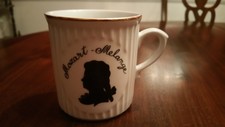
Mozart Melange Meinl Kaffee Coffee Mug Cup Black White Gold Trim NEW
- £16.31
- + £16.49 postage

Mozart Melange Meinl Kaffee Coffee Cup Free Domestic Shipping
- £17.01
- + £43.81 postage

1932 Press Photo Michiko Tanaka, Wife of Julius Meinl, Austrian Coffee King
- £11.77
- + £10.37 postage
- Excellent customer service as rated by buyers
- 30-day returns
- A free delivery option
- A fast delivery option
- Excellent customer service as rated by buyers
- 30-day returns
- A free delivery option
- A fast delivery option
Not finding what you're looking for?
Save julius+meinl+coffee+cup to get e-mail alerts and updates on your eBay Feed.
Julius Meinl

- View a machine-translated version of the Deutsch article.
- Google's machine translation is a useful starting point for translations, but translators must revise errors as necessary and confirm that the translation is accurate, rather than simply copy-pasting machine-translated text into the English Wikipedia.
- Do not translate text that appears unreliable or low-quality. If possible, verify the text with references provided in the foreign-language article.
- You must provide copyright attribution in the edit summary by providing an interlanguage link to the source of your translation. A model attribution edit summary (using German): Content in this edit is translated from the existing German Wikipedia article at [[:de:Exact name of German article]]; see its history for attribution.
- You should also add the template <
- For more guidance, see Wikipedia:Translation.
Julius Meinl International (German: Julius Meinl AG, Meinl-Gruppe ), also known simply as Julius Meinl, is a manufacturer and retailer of coffee, gourmet foods and other grocery products. The company is based in Vienna, Austria. It is named after its founders Julius Meinl I, and Julius Meinl II.
Julius Meinl III ceded control of the company to his son in 1987. The retail division of the group, except the high-profile flagship store in downtown Vienna, was sold to Rewe by Julius Meinl V in 1998/1999.
Later the company's name was changed to Ragusa Beteiligungen [ citation needed ] , and the company was delisted from the Vienna Stock Exchange in February 2007.
Julius Meinl operates three coffee shops in the U.S., all three on the North Side of Chicago, Illinois. In 2015, Julius Meinl opened a subsidiary in Cincinnati, Ohio to begin distribution in North America. In November 2016, Julius Meinl launched ‘next-generation’ 1862 coffee machine. [1]

The first logo of the company was designed in 1924 by Joseph Binder, a Viennese graphic designer. The logo depicted a dark-skinned boy with a red fez on his head, as a hint to the origin of the coffee. The design has changed significantly over the years, but the silhouette of a boy has remained its core part. In 2004, Italian designer Matteo Thun has performed a redesign of the logo, making him look upright and using a single colour for the whole logo, effectively eliminating the boy's dark skin colour. [2]
In 2007, an initiative called Mein Julius (English: "My Julius") started using the original version of the logo to protest against racist stereotypes and misinterpretations of Africa and the colonial period. This initiative has not indicated that they used the pre-redesign version of the logo, which led to criticism of the initiative itself. [3] [4]
Meinl.at
Visit meinl.at
http://meinl.at
Countable Data Brief
Meinl.at is tracked by us since May, 2015. Over the time it has been ranked as high as 5 326 199 in the world, while most of its traffic comes from Russian Federation, where it reached as high as 509 431 position. All this time it was owned by Thomas Meinl, it was hosted by INODE SERVERFARM.
Meinl has a high Google pagerank and bad results in terms of Yandex topical citation index. We found that Meinl.at is poorly ‘socialized’ in respect to any social network. According to MyWot, Siteadvisor and Google safe browsing analytics, Meinl.at is quite a safe domain with mostly positive visitor reviews.
Worldwide Audience
Meinl.at gets 100% of its traffic from Russian Federation where it is ranked #682598.
Traffic Analysis
It seems that the number of visitors and pageviews on this site is too low to be displayed, sorry.
Subdomains Traffic Shares
Meinl.at has no subdomains with considerable traffic.
Meinl.at has Google PR 5 and its top keyword is "julius meinl" with 54.92% of search traffic.
% of search traffic
Domain Registration Data
Meinl.at domain is owned by Thomas Meinl .
Owner since May 07, 2015
Changed at December 12, 2011
Registrar and Status
Social Engagement
Meinl.at has 0% of its total traffic coming from social networks (in last 3 months) and the most active engagement is detected in Facebook (70 shares)
of total traffic in last 3 months is social
Julius Meinl

- View a machine-translated version of the Deutsch article.
- Google's machine translation is a useful starting point for translations, but translators must revise errors as necessary and confirm that the translation is accurate, rather than simply copy-pasting machine-translated text into the English Wikipedia.
- Do not translate text that appears unreliable or low-quality. If possible, verify the text with references provided in the foreign-language article.
- After translating, <
- For more guidance, see Wikipedia:Translation.
Julius Meinl International (German: Julius Meinl AG, Meinl-Gruppe ), also known simply as Julius Meinl, is a manufacturer and retailer of coffee, gourmet foods and other grocery products. The company is based in Vienna, Austria. It is named after its founders Julius Meinl I, and Julius Meinl II.
Julius Meinl III ceded control of the company to his son in 1987. The retail division of the group, except the high-profile flagship store in downtown Vienna, was sold to Rewe by Julius Meinl V in 1998/1999.
Later the company's name was changed to Ragusa Beteiligungen [ citation needed ] , and the company was delisted from the Vienna Stock Exchange in February 2007.
Julius Meinl operates three coffee shops in the U.S., all three on the North Side of Chicago, Illinois. In 2015, Julius Meinl opened a subsidiary in Cincinnati (OH) to begin distribution in North America.
The first logo of the company was designed in 1924 by Joseph Binder, a Viennese graphic designer. The logo depicted a dark-skinned boy with a red fez on his head, as a hint to the origin of the coffee. The design has changed significantly over the years, but the silhouette of a boy has remained its core part. In 2004, Italian designer Matteo Thun has performed a redesign of the logo, making him look upright and using a single colour for the whole logo, effectively eliminating the boy's dark skin colour. [1]
In 2007, an initiative called Mein Julius (English: "My Julius") started using the original version of the logo to protest against racist stereotypes and misinterpretations of Africa and the colonial period. This initiative has not indicated that they used the pre-redesign version of the logo, which led to criticism of the initiative itself. [2] [3]


Комментариев нет:
Отправить комментарий