Maxwell kaffee

How Fat is Your State?
CalorieLab's ranking, new for 2015.
Cheesecake Factory!
Full nutrition data unveiled.
Beware the Master Cleanse
Read our expose of the diet.

For Improved Health and a Longer Life, in Dog We Trust
Owning a dog is good for your health, particularly if that dog is large, and even more so if you happen to live alone.

Death, Dying and Medicine
Most people, including doctors, don't like to talk about death, but thinking more about end-of-life care and how to do it well is important as people live longer lives with more illnesses.

The Industry That’s Selling Us Our Obesity Crisis
Marketing of less-than-healthy foods is all over the place these days, particularly aimed at kids, who are more susceptible to that kind of advertising. The best we can do is to look away.

Obesity: It's Not Your Fault - It is Your Choice
More researchers seem to be pointing out ways that being overweight or obese aren't really the indvidual's fault, but why we gain weight isn't really all that complicated.

“Fatty Liver Disease” Begins with Fat
Increasing rates of obesity raise the danger of normalizing too much weight, and pose bigger health problems than the ones we're already dealing with.

Maxwell House Coffee Nutrition Facts
Package: 13 oz - 368 g - 85 servings - UPC *1300
Serving: 2 tsp - 16 g
The Skinny from CalorieLab 

Nutritional summary of "Maxwell House Coffee": This food contains no reportable trans fat. Its 3R nutrient density rating is 0 (where anything over 1 is relatively good).
Copyright 2000-2017 CalorieLab, Inc. | About CalorieLab® | By using CalorieLab you agree to our User Agreement | Privacy | 2360 Corporate Circle, Henderson, NV 89074
Build your business with an American classic.
"Good to the Last Drop" for more than 120 years, our globally recognized signature blend has delivered a consistently rich and satisfying full-bodied flavor.
MAXWELL HOUSE coffee blends are crafted from the highest-quality beans, using industry-leading standards and technology to ensure that every cup you serve is consistently delicious.
All MAXWELL HOUSE coffee varieties are certified Kosher, and decaf options are naturally decaffeinated.
Click on the formats below to find the right fit for you.
SAVE UP TO $200
Bev1 Brands Best Sellers Rebate Featuring MAXWELL HOUSE
MAXWELL HOUSE Brand Power
"Show customers you proudly serve the brand with 92% consumer awareness¹ and build profits with branded merchandising from a recognized brand.
MAXWELL HOUSE Liquid Coffee: A perfect solution for quality coffee service in hotels Read
MAXWELL HOUSE Liquid Coffee: An efficient solution for c-store coffee offerings Read
MAXWELL HOUSE Shelf Stable Coffee Innovating for Convenience and Quality Read
We're Sorry, We Cannot Find the Page You Requested
 HOLIDAY READY
Gifts of the Week

Due to inactivity, you will be signed out of Walgreens.com soon.
Please choose to continue your session or sign out now.
Pick up where you left off?
You've been signed out due to inactivity, but it's easy to pick up where you left off on Walgreens.com.
Continue session Continue Sign out
Return to MyPrime.com
Due to inactivity, you'll need to go back and
Подробные сведения о Maxwell & Williams Motion Kaffee-& Tafelset Kaffee Tafel Service 30-tlg
Подробнее о программе «Лучший продавец» — открывается в новом окне или вкладке
- Постоянно получает самые высокие оценки покупателей
- Быстро отправляет товары
- Заработал репутацию продавца, предоставляющего прекрасное обслуживание
Информация о товаре
Пользователи, которые просмотрели этот товар, также просмотрели

Maxwell & Williams WB Coffee & Dinner Set, 30-teilig, Porcelain
Maxwell & Williams Bisou Coffee Cups Set for Coffee 30 Pieces White P73830

Maxwell & Williams Leaves in Motion 6 Soup Plates & 6 Dinner Plates, Porcelain

Maxwell & Williams Motion Set of Bowls Square 4 Pasta/ Soups/ Desserts 6 Pieces

Maxwell & Williams Motion Kaffee-& Tafelset Kaffee Tafel Service 30-tlg

Maxwell & Williams Moon Shadow Dinner Set, 12 Pieces, Porcelain
Methods Used in the Decaffeination of Coffee
Dr. Ludwig Roselius invented a method for decaffeinating coffee beans in 1903. Germany issued a patent for the process 1906. For years, Roselius and his team had researched a method to remove caffeine from coffee beans without diluting the coffee's aroma or flavorful taste.
His technique involved using brine-soaked coffee beans. This technique was discovered when he obtained coffee beans that had plunged into the sea during a storm. He discovered that the brine-soaked coffee beans reacted differently to the coffee roasting process than did unsoaked coffee beans.
Roselius eventually refined the decaffeinating process, and created a method that removed 97% of the caffeine from coffee beans without greatly altering the coffee's taste. Based on his method, he established a company in Germay called Kaffee Hag, and introduced the new coffee product to the world under different names in different countries.
In the United States, the Kaffee Hag product was introduced in 1923 as "Sanka," which is an abbreviated form of the French phrase "without caffeine." By 1946, "instant" Sanka was available as well.
More than 70 years after Roselius' discovery, Maxwell House discovered an innovative process to remove the caffeine from coffee beans by using carbon dioxide. In 1980, General Foods acquired the rights to use this method of decaffeination in the United States.
Today, there are three main methods used to remove the caffeine from coffee beans: 1) Swiss water decaffeination, 2) chemical decaffeination, and 3) the superficial carbon dioxide method.
Swiss Water Decaffeination of Coffee
The Swiss water decaffeination process is a two-step process involving two batches of green coffee beans. The process begins by soaking the first batch of green coffee beans in water to dissolve the caffeine. Once the caffeine has been dissolved, the water is drawn off and passed through carbon filters, which remove the caffeine from the water.
This results in the first batch of coffee beans having no caffeine or coffee flavor left. The caffeine is left behind in the filter, but the filtered water now contains the full coffee flavor without the caffeine. The first batch of depleted coffee beans is discarded. The flavor-enhanced water is then reused to remove the caffeine from a second batch of green coffee beans.
The second time around, since the water is already saturated with coffee flavor, the caffeine is removed from the coffee beans, but the coffee flavor is left intact. By this process, the second batch of green coffee beans retains its flavor and aroma, while losing the caffeine.
The second batch of coffee beans is now decaffeinated, and is ready for drying and roasting. This method removes 99.9% of the caffeine in the coffee beans, but it is expensive, because it takes two batches of coffee beans to produce a single batch of decaffeinated coffee beans.
Chemical Methods for Decaffeinating of Coffee
Chemical methods for decaffeination comprise direct and indirect methods. In the direct methods of decaffeination, the green coffee beans are first soaked in water. Then they are flushed with methylene chloride, which draws out the caffeine. The methylene chloride must then be removed from the coffee beans in a subsequent rinsing, since it has been linked to cancer in laboratory animals.
Another effective caffeine solvent is ethyl acetate, which is used more in the indirect decaffeination processes. In the indirect decaffeination processes, the green coffee beans are steeped in hot water in order to dissolve the caffeine. Then the water is separated from the coffee beans. The flavored water is treated with ethyl acetate to remove the caffeine. Finally, the flavor from the water is returned to the coffee beans via another soaking and drying process. Any remaining traces of ethyl acetate are removed in a final step.
Superficial Carbon Dioxide Method for Dercaffeinating Coffee
As in the other methods, the green coffee beans are soaked, so as to dissolve the caffeine. Then the saturated green coffee beans are exposed to carbon dioxide gas, which reacts with the caffeine and removes it. This decaffeination method is most efficiently used when large quantities of coffee beans are being decaffeinated. Therefore, this is the method most frequently used in commercial decaffeinating applications.
While the Swiss water decaffeination process is the most natural, meaning that it doesn't depend on introducing chemical solvents or gasses, it is generally not as cost effective as the other decaffeinating methods, because it uses the most coffee.
We're Sorry, We Cannot Find the Page You Requested
HOLIDAY READY
Gifts of the Week
Due to inactivity, you will be signed out of Walgreens.com soon.
Please choose to continue your session or sign out now.
Pick up where you left off?
You've been signed out due to inactivity, but it's easy to pick up where you left off on Walgreens.com.
Continue session Continue Sign out
Return to MyPrime.com
Due to inactivity, you'll need to go back and
Maxwell

Maxwell ist ein Instant-Kaffeemarke des amerikanischen Herstellers General Foods. 1954 gründete General Foods in Elmshorn eine deutsche Niederlassung und als erstes Produkt wurde den Verbrauchern der lösliche Kaffee Maxwell-Express angeboten. Bereits einige Jahre vorher hatte das Schweizer Unternehmen Nestle Ihren Nescafe auf den Markt gebracht und war damit sehr erfolgreich. Zwischen den beiden Herstellern entbrennt in den 60er Jahren ein heftiger Preiskampf für löslichen Kaffee.
General Foods wird 1985, wie auch die Firma Kraft, in das Unternehmen Philip Morris eingegliedert und später zu Kraft General Foods und dann zu Kraft Foods.
Aus Kraft Foods wird 2012 in Europa Mondeléz International und man entschließt sich, das Kaffeegeschäft mit dem niederländischen Getränkeunternehmen D.E Master Blenders 1753 zu bündeln. In diese Zusammenarbeit bringen die beiden Unternehmen so bekannte Kaffeemarken, wie Senseo, Douwe Egbert, Jacobs Kaffee, Kaffee Hag, Maxwell House, Tassimo und Onko ein.
Das Kaffeewerk in Elmshorn ist heute einer der wichtigsten Produktionsstandorte für löslichen Kaffee.
Sie erreichen uns per Telefon unter 05121 - 80 90 666
von Mo. - Do. 8-17 Uhr und Fr. 8-15 Uhr
einmalig 5,00 € - egal wieviel sie bestellen!
Details about Maxwell & Williams Bisou Kaffee- und Tafelset, Tafelservice, 30-tlg., Porzellan
Seller information
Item information
People who viewed this item also viewed

Maxwell & Williams Bisou Kaffee- und Tafelset, Tafelservice, 30-tlg., Porzellan

Topkapi TK-800, 30-tlg Tafelservice Classic Elegance TK-800, für 6 Personen
Sänger Kombiservice 'New Port' Porzellan 16 teilig 4 Personen klassisch rund

94643 Ambition Tiffany - Tafelservice Tafelset Set Porzellan 30 Tlg.
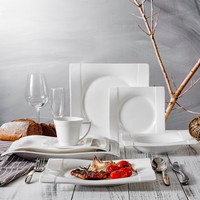
Vancasso Aurora 32 tlg. Porzellan Tafelservice Weiß
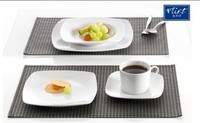
Ritzenhoff & Breker Flirt SARA Tafelservice 12tlg OVP NEU
Koffeingehalt von Maxwell House
Joel Wange, ein Verkäufer aus Kentucky kam mit einer speziellen Mischung aus Kaffee in 1874 - Er verkaufte den Kaffee in das Restaurant in Nashville Maxwell House Hotel, das ist, wie die Marke schließlich seinen Namen erhielt. Theodore Roosevelt schmeckte der Kaffee Jahre später, und antwortete: "Erfreut! Es ist gut, bis zum letzten Tropfen", wenn gefragt, ob er eine Mine wollte. Dieser Satz wurde ein Teil der Markenidentität, Logo und Werbung.
Im Jahr 2007 wechselte von Maxwell House mit Blended Arabica-und Robusta-Bohnen auf 100 Prozent Arabica in allen Produkten, mit Ausnahme seiner Instant-und Master-Blend-Kaffees. Die Änderung vorgesehen Verbraucher reicher, würziger Kaffee. Glatte Verkostung Arabica Kaffeebohnen, aus Süd-und Mittelamerika exportiert, enthalten 0,9 bis 1,7 Prozent Koffein, nach der Illy-Kaffee-Website. In raueren Umgebungen geerntet, durchschnittlich geringerer Qualität Robusta-Bohnen zwischen 1,6 und 2,8 Prozent Koffein.
Maxwell House verfügt über 10 Entscheidungen von koffeinhaltigen, gemahlenen Kaffees, von mild Frühstück Blend robust Dark Roast. Boden Original-Roast ist eine ausgewogene Mischung, unter Berufung auf eine Vielzahl von Gaumen. Ein 16 Unzen dient dieses Medium gebratenes enthält 160 bis 200 mg Koffein. Nach der Mayo Clinic, einem durchschnittlichen 8 Unzen Tasse Kaffee enthält zwischen 90 und 200 mg Koffein.
Maxwell House Filter-Packs bestehen aus vordefinierten gemessen, gemahlenen Kaffee für den Einsatz in automatischen Tropfkaffeemaschinen konzipiert. Jedes Paket bequem braut 4 bis 6 Tassen Kaffee. Die Kraft Foods Website sagt eine einzelne 6 Unzen Servieren von Maxwell House Filter-Packs enthält zwischen 55 bis 60 mg Koffein.
Maxwell House macht auch ein Sortiment an Spezial aromatisierten Kaffee-Mischungen, einschließlich der ursprünglichen, gerösteten Haselnüssen, Zimt Dulce und irische Creme Cappuccino. Diese Getränkepulver sind eine Mischung aus Instant-Kaffee, nicht Milch-Sahne, Süßungsmittel und Aromastoffe. Ein 8 Unzen Servieren von International Irisch Creme Cappuccino enthält 45 bis 50 mg Koffein.
Food & Drink
The truth about decaf coffee

Published August 25, 2014

Green coffee beans before (L) and after (R) the decaffeination process. (2014 Alastair Bird, SWISS WATER®)

An operators dumping the beans into the decaffeination process machine. (SWISS WATER® )

A cup of coffee surrounded by roasted beans. (iStock)
Millions of Americans drink decaf coffee to get that perfectly bitter taste without all the jitters.
But does decaf really have no caffeine? What’s the difference between "decaffeinated" and "naturally decaffeinated”? And are the chemicals used to strip the caffeine from coffee safe?
To understand what’s in your cup of decaf, you first need to understand what’s not in it.
FDA regulations specify that for coffee to bear a decaffeinated label, 97 percent of the original caffeine must be removed from the beans. So, yes, there’s caffeine in decaf coffee. But it’s not very much, right?
Not so fast. Caffeine content varies from bean to bean.
Coffee in America generally contains one or a blend of two bean types – the hardy Robusta bean and the sweeter, delicate Arabica bean. Robusta beans generally contain twice the caffeine of Arabica beans, but their harsh taste is often considered inferior. Instant coffee brands like Folgers and Maxwell House tend to be Robusta blends, while coffee houses like Caribou and Starbucks pride themselves on their pure Arabica beans.
While 97 percent of the caffeine must be removed, the Robusta bean will have more caffeine left over than the Arabica bean after the decaffeination process is completed, which can lead to a lot of variance among brands.
The FDA does not require the amount of caffeine to be labeled on decaffeinated coffee products, but the upshot is that if you’re looking for less caffeine in your cup, you should pay attention to the type of bean that goes into it.
The average 12-ounce cup of decaf coffee – a Starbucks tall – usually contains between 3 and 18 milligrams of caffeine. (By comparison, an 8.4-ounce can of Red Bull contains 80 milligrams of caffeine) The average of amount of caffeine in regular coffee can vary significantly, usually between 140 and 300 mg.
In 2007, Consumer Reports studied cups of decaffeinated coffee from popular chains. While most cups had fewer than 5 milligrams of caffeine, one cup from Dunkin Donuts contained a whopping 32 milligrams, and another from Seattle’s Best came in at 29 milligrams – certainly not a caffeine-free choice . In their sample, decaf cups from McDonald’s consistently had the fewest milligrams of caffeine.
Maria Bella, a nutritionist who founded Top Balance Nutrition, a weight management and healthful eating consulting center, in New York City, says caffeine sensitivity will affect how jittery you feel, and it may be influenced by other factors like diet and daily schedule.
She stresses that there is no such thing as coffee with zero caffeine in it.
“Beverages should only be considered ‘caffeine-free’ if there was never any caffeine in the ingredients to begin with,” she says. “Coffee and non-herbal teas should not be labeled caffeine-free.”
So how do you get (almost) all that caffeine out of the coffee, anyway?
The caffeine is removed from green coffee beans, before they are roasted, and there are a number of different processes, all of which affect the roasting process and how long the coffee stays fresh. (Decaf coffee goes stale almost twice as fast as regular coffee.)
The first decaffeination method, developed in the early 1900s, used a repetitive rinsing process aided by the chemical benzene, which is no longer used because it is a known cancer-causing agent.
Today, like seasoned vintners, coffee processors favor different decaffeination methods for optimum taste and quality.
Many brands use the Direct Process, which involves the chemical methyl chloride.
Two other methods are the Natural Process, which removes the caffeine using the plant hormone ethyl acetate or carbon dioxide, and the Water Process, which uses no chemical agents, just pure H2O.
Processes utilizing CO2 and the Water Process, pioneered by SWISS WATER®, are both considered Natural Processes and are the only methods that can be certified organic. And while organic coffee is gaining popularity, it is still hard to find in many supermarkets.
Methyl chloride, used in the Direct Process, is listed as a possible carcinogen by the National Cancer Institute, but FDA regulations consider up to 10 parts per million (ppm) to be safe for consumption. Trace amounts of the chemical have been found in decaf coffee brews, but most blends have a concentration at or below 1 ppm.
Lorenzo Perkins of Cuvee Coffee in Austin, Texas, who has been brewing coffee for 13 years, says that small trace is not a cause for concern. As a SCAA—Specialty Coffee Association of American-- certified level 2 barista and vice chair of the Barista Guild of America, he’s seen it all when it comes to coffee production.
“Methyl chloride has the least affect on taste because of the way the chemical bonds with the alkaloids in caffeine,” Perkins said. “It leaves the other organic material alone, resulting in a superior tasting coffee.”
Nonetheless, coffee producers are increasingly sensitive to consumer concerns about additives. Starbucks, which uses methyl chloride to decaffeinate most of its blends, now offers a “naturally processed” decaf Sumatra brew. Caribou Coffee uses a non-chemical water process in all its decaf blends. And the Coffee Bean says it tests its decaffeinated blends to ensure that there are no chemical residues from the process it uses.
One final note about decaf: Studies have linked excessive regular coffee drinking to hypertension, decreased bone density and high levels of gastric acidity. And while switching to decaf might help with insomnia, those looking to avoid other unwanted health problems associated with coffee should not assume that eliminating their caffeine intake is the answer.
“Many health conditions that are affected by coffee are also aggravated by drinking decaf, due to the phytochemicals that remain after the decaffeination process,” Bella said.
These conditions include increased gastric acidity (heartburn or GERD), interfering with mineral absorption (particularly iron) and increased incidence of rheumatoid arthritis.
Bella says that up to 400 milligrams of caffeine is considered fine for most adults in good health.
Trending in Food & Drink
Supreme Court permits full enforcement of Trump travel ban
Trump shrinks Utah monuments created by Obama, Clinton
Major concealed-carry bill picks up momentum, steams toward House floor
Ex-Florida Democratic Rep. Corrine Brown sentenced for mail, wire and tax fraud involving sham charity
Gay wedding cake controversy heads to Supreme Court
Tools
Follow
This material may not be published, broadcast, rewritten, or redistributed. ©2017 FOX News Network, LLC. All rights reserved. All market data delayed 20 minutes.


Комментариев нет:
Отправить комментарий